
Time-sensitive deliveries in Australia are likely to grow significantly in 2026 and the upcoming years, despite complex networks and growing shipment volumes.
In 2023-2024, the same-day delivery market was valued at AUD 1.1 billion, and is likely to significantly grow and be valued at over AUD 9 billion by 2033.
To manage every time-sensitive delivery effectively, shippers must redesign and optimise the logistics process to meet tight deadlines.
The expectation of on-time performance has never been higher, and with the right partners, processes, and smart technology, you can dramatically lift delivery rates. This is highlighted by the fact that over 77% consumers expect deliveries to be fulfilled within two hours or less.
Before delving deeper into planning and implementing a time-sensitive delivery, let us begin by understanding the importance of time-sensitive deliveries, followed by the challenges and actionable tips to consider in the process.
Importance of Nailing Time-Sensitive Deliveries
Streamlining deliveries to be more reliable is a driver of loyalty, with over 85% Australian shoppers stating that delivery reliability is a critical factor for choosing a retailer.
Most online shoppers expect their parcels to be delivered within just a couple of days, making fast and predictable deliveries a need of the hour.
With time-sensitive deliveries becoming the baseline for most types of order fulfilment, it is no longer a premium or desirable feature for customers.
The same-day and express delivery market is largely expanding in Australia, and is valued at over AUD 1.1 billion in 2024.
Over the next decade, the market is likely to grow significantly, thanks to a wide range of freight and courier options. When dealing with time-sensitive freight like perishables or urgent goods, ensuring faster speed and greater reliability in the shipping process can reduce spoilage, downtime, and improve your margins.
5 Challenges in On-Time or Early Deliveries
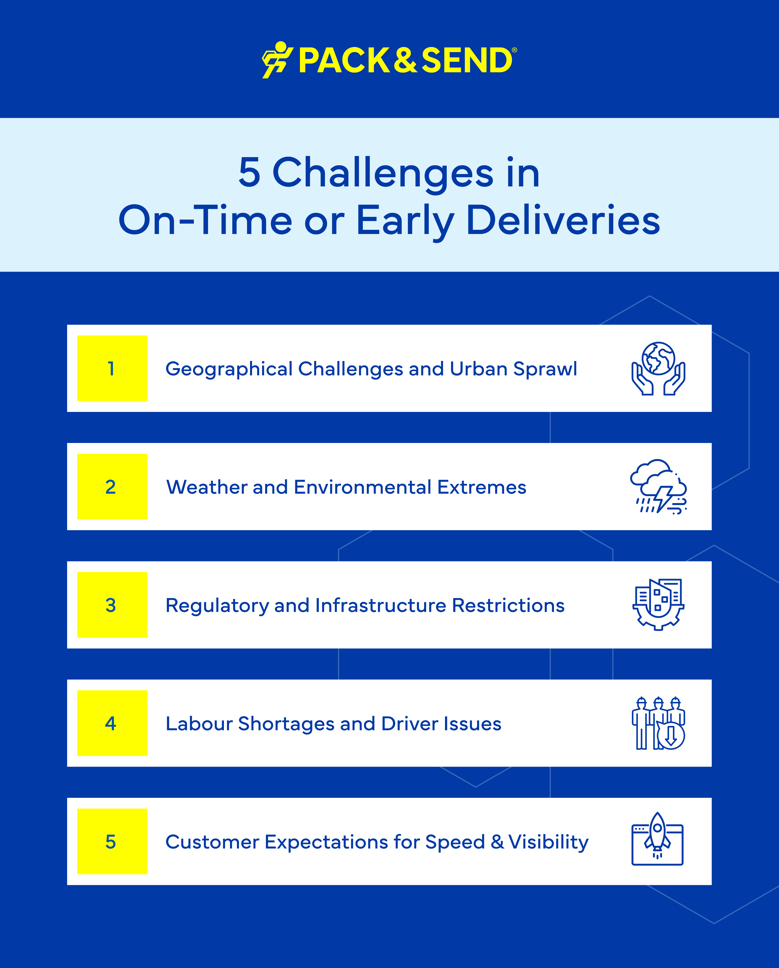
Now that we have learned about the importance of time-sensitive deliveries, let us explore the challenges associated with the process.
Some of the key challenges of early deliveries include:
1. Geographical Challenges and Urban Sprawl
Numerous routing complexities and supply chain obstacles can hamper the overall fulfilment and shipping processes, owing to the vast distances and coastal barriers in Australia.
For instance, cities like Sydney and Melbourne feature rivers, harbours, and waterways that act as natural barriers, forcing shippers to implement specific routing strategies like bridge or tunnel crossings, which can cause delays and complicate planning.
Additionally, major cities and suburbs pose traffic congestion issues and restrictions that require different kinds of vehicles and long travel times, affecting the final turnarounds.
2. Weather and Environmental Extremes
Multiple weather and environmental factors, such as flooding, intense heat, bushfires, and severe conditions, can impact or even reduce your vehicle's performance and slow down your driver operations.
These factors can even disrupt routes and affect the movement and fulfilment of perishable or time-critical goods.
3. Regulatory and Infrastructure Restrictions
Businesses that regularly deal with shipping must contend with a wide range of state-specific vehicle rules, height/weight limits, parking shortages, construction projects, and strict loading zone time limits.
Due to such restrictions, your transport vehicles may be forced to take detours and experience delays.
4. Labour Shortages and Driver Issues
When you are facing any kind of driver/ logistics workers/warehouse staff shortage, you may end up with overwhelmed processing in your shipping operations.
This unnecessary pressure can also cause unsafe speeding to prevent delays and high turnover rates in your delivery operations.
5. Customer Expectations for Speed & Visibility
Over 44% customers abandon their purchases if the delivery timeline exceeds two days.
Many companies and online retailers already provide a wide range of delivery speeds and visibility into their shipping processes.
However, customers still expect competitive speeds, real-time tracking features, and even same-day options, thus maximising the quality of your last-mile logistics process.
16 Useful Tips to Nail Time-Sensitive Deliveries in Australia
Even if you get most parts of your shipping operations right, your ability to nail time-sensitive deliveries boils down to your strategic actions and decisions. Here are some of the most useful tips to follow when streamlining and ensuring timely deliveries in Australia:
1. Ensure Your Goods are Packed Properly
When you are dealing with numerous missed time-sensitive deliveries resulting from non-compliance, damage, or leakage, it is time to take a second look at the quality of your packaging materials.
Poor packaging will inevitably lead to returns, inspections, and re-work.
To avoid this situation, you must use high-quality packaging materials that are suitable for the weight, fragility, and transport mode of your shipment.
For starters, you must invest in the right cushioning, double-walled cartons, and corner protectors for shipping your products. Additionally, you must consider investing in insulated packaging and cold gel packs when handling perishable or temperature-sensitive goods.
To ensure better and seamless management of your packaging processes, standardise the packaging materials used across SKUs and issue instructions to keep your packing process efficient and consistent across products.
2. Add Shipping Labels Accurately
Proper labeling is crucial to the success of your shipping process, and any errors can derail the process, especially in the case of time-sensitive shipments.
When moving between carriers or transportation modes, labels that clearly identify the sender and recipient addresses, contact details, and specific identifiers can expedite the last-mile delivery process.
The labels on shipments must match the format of specific carriers and include any internal routing details in case of business addresses.
Automate label generation rather than handling and managing the process manually to ensure accuracy and validate the details with robust tools.
Every minute you save by automating and optimising your labeling process can lengthen your transit time.
3. Optimise the Logistics Workflow
Right from capturing an order to delivering it, optimising every part of your logistics process can directly impact your bottom line. The internal processes and buffers associated with the logistics process can impact your delivery performance, giving you plenty of opportunities for optimisation.
To ensure that you have a strong internal foundation to drive your time-sensitive delivery optimisation forward, you must map every step of the process effectively, identify bottlenecks promptly, and create time-bound service level agreements (SLAs) for each stage of the process.
For instance, you can prioritise time-sensitive orders by assigning dedicated picking queues and marking totes.
You must work on aligning your internal cut-off times with the collection schedules of the chosen carrier service, which leaves plenty of buffer for unforeseeable issues like traffic disruptions or system slowdowns.
For example, if the collection schedule of your chosen carrier defines that they will pick up your order every two days, your internal cut-off time should be at least 12 hours before that, to avoid any delays.
4. Commit to a Timeline and Deliver Accordingly
To drive more loyalty and satisfaction among your customers, you must prioritise delivering on your promises rather than making unrealistic promises.
Some Australian retailers even advertise conservative or “safe” delivery timelines, even if they are most likely to deliver shipments much sooner.
You can prevent disappointment and unforeseen delays, and boost customer satisfaction and happiness levels with early deliveries.
You must set data-driven and realistic delivery promises informed by your past performance and communicate them at checkout through order confirmations and tracking updates.
For critical or B2B shipments, you must include penalties and credits within contractual SLAs to ensure that your operations and partners adhere to the agreement.
5. Plan Delivery Processes Meticulously
Planning for time-sensitive deliveries must be done strategically and much before you start offering short and competitive delivery options to customers.
You can segment your customers and SKUs based on service level, like same-day, overnight shipping, or standard deliveries, and design a dedicated process for each service level.
Align your inventory performance with demand trends and patterns by positioning and placing all the fast-moving SKUs at urban fulfilment centres near cities like Melbourne, Sydney, and Brisbane to effectively facilitate express courier and deliveries.
In your daily planning process, you must choose the best carrier for each postcode and area, based on its performance.
Create contingency plans to address unforeseeable events like carrier outages, weather disruptions, or road closures, by creating optimised routes or assigning high-performing carriers.
6. Audit the Shipment Process
Ensure consistently on-time deliveries by continuously improving your logistics and fulfilment processes.
With this goal in mind, you must conduct regular audits of your shipment process to examine your order-to-ship times, packaging quality, carrier handover, and pick accuracy.
Doing so can help maintain better handover times and on-time deliveries aligned with the service levels.
Your supply chain performance can face ongoing disruptions and remain fit for purpose as volumes and conditions change. Utilise data analytics to identify the causes for late deliveries, like recurring delays, underperforming carriers, or highly optimistic internal cut-offs.
Implementing a small set of targeted improvements, like cut-off adjustments and updating packaging materials for fragile items, to measure the impact on your on-time rates.
7. Implement Special Considerations Whenever Required
When dealing with special cargo, you must be aware of additional planning items to facilitate time-sensitive deliveries and commitments.
For example, when you are shipping pharmaceuticals or perishable items, you may need to avail time sensitive refrigerated delivery to avoid uncertainties and the delivery timeframe.
In practice, special considerations for cargo mostly entail labeling your shipment accurately in case of special handling instructions or urgent deliveries, including specific service codes or stickers, and streamlining operations.
Create detailed SOPs for specific goods so everyone on the team knows the necessary steps and guidelines for shipping them.
8. Research the Customs Process in Advance
When shipping goods in or out of Australia, you will inevitably deal with extensive biosecurity and customs clearance that can make your time-sensitive delivery promises succeed or fail.
Australia follows strict policies at the borders and requires a highly detailed, accurate documentation and declaration process.
Any missing permits or documents can cause delays, unnecessary inspections, shipment holds or returns, and even destroy any expedited timelines.
Start by ensuring that your goods are classified into the right categories and designate accurate invoices and permits, especially if you are dealing with plant, food, or animal products.
If you are struggling with the paperwork involved in the process, consider working with customs brokers or freight forwarders who will guide you through it and help you with recurring shipments.
9. Leverage Technology for Tracking and Monitoring
Did you know that more than 77% of shoppers in Australia expect complete tracking transparency from online stores and retailers?
What this means is that consumers seek highly visible and reliable delivery experiences, and retailers must consistently meet those expectations to remain competitive.
Consolidate data from multiple carriers to provide an unambiguous view of the shipping process by encouraging proactive communication.
Consider utilising modern track-and-trace platforms to improve the effectiveness of the shipment tracking and monitoring process. Leverage the following actionable tips when dealing with time-sensitive delivery:
-
Utilise IoT sensors or GPS-enabled devices to track and monitor the location of critical or high-value shipments. These devices can also help you track the temperature or climate control mechanisms for the goods.
-
Set automated alerts for the key milestones, such as pickup, arrival at port/distribution centre, or out for delivery, so the relevant teams or personnel can intervene early and proactively.
-
Reduce order tracking-related queries and build trust among customers by providing SMS/email updates and brand portals.
10. Automate Parts of the Shipping Process
While we have discussed the involvement of automation quite a few times by now, entire parts or steps of the process must be easily automated.
Implementing automated shipping can reduce human error and shrink cycle times, significantly contributing to your time-sensitive logistics process.
Modern Australian retailers invest in various tools such as transportation management software, integrated shipping platforms, and automating sorting to expedite cargo or time sensitive document delivery timelines. Such digital tools can help retailers track, optimise, manage, and fulfil shipments in a way that helps goods move through the process efficiently.
Some areas of the shipping process that you must automate include rate shopping, carrier selection, label generation, order fulfillment, and exception workflows.
11. Choose the Right Transportation Mode
Your choice of transportation mode can impact the cost and transit times of your shipments.
If your time-sensitive shipments are domestic, you might deal with road transport more often, as this mode works great for lighter, regional pickups or standard shipments.
For shipments where speed trumps cost, like high-value or urgent shipments or time sensitive medical delivery, you must prioritise air freight as the better option, especially when shipped to major destinations.
In contrast, rail freight is crucial for time-sensitive or bulk cargo, but not for those that require rapid delivery. You can even consider implementing intermodal strategies that can help you balance cost and speed more effectively.
For instance, when shipping valuable cargo to a remote location within Australia, you can consider implementing an intermodal strategy combining air freight and road freight.
The air freight option can get your shipment to the nearest hub, and the road freight can help you navigate the last-mile delivery effectively.
12. Optimise the Supply Chain
The delivery success of your time-sensitive shipments depends on the overall design and structure of your supply chain.
According to the Review of the National Freight and Supply Chain Strategy, the total domestic freight is estimated to grow by 26% between the years 2020 and 2050.
As a result, the pressure on supply chain networks is likely to grow, and businesses that reconfigure their processes to deliver resilience and speed, rather than just cost reduction, will consistently deliver on-time performance.
Reduce your dependency on a single node in your supply chain and improve flexibility during disruptions by setting up micro-fulfilment centres and locating inventory closer to demand.
For instance, setting up micro-fulfilment centres in every major city of Australia, like Melbourne, will help you streamline and expedite deliveries within and around the city.
This ensures that if domestic logistics are disrupted by extreme weather conditions or calamities in other cities, the orders in and around Melbourne do not get impacted
You should also streamline internal processes, such as warehouse layouts and robust inventory practices.
13. Prioritise High-Value Items
When designating a shipment as high-priority or time-sensitive, consider its financial value, regulations, and customer impact.
Get priority treatment in time-sensitive situations, wherein perishable goods will be shipped using air freight to skip intermediate hubs and minimise delays.
You can create prioritisation rules based on customer tier, margin, product importance, and service level. Doing so ensures high-priority orders will be processed faster, implement better tracking, and utilise reliable transport options.
For instance, you can consider sorting and prioritising orders of customers who are enrolled into your loyalty program over the other orders during sales events.
Utilise fast lanes in warehouses and employ premium carriers for important and time-sensitive shipments, but consider that the costs are marginally higher.
14. Plan Properly for Peak Periods
There are several peak periods for a typical retailer within a year, including November-December sales, back-to-school sales, seasonal discount periods, and more. In 2024, the retailer turnover in the month of December alone surpasses AUD 37 billion.
During such retail peak periods, carrier service providers usually adjust cut-offs as transit times can often stretch longer than the standard times.
To maintain time-sensitive performance of your retail store, whether offline or online, planning ahead of time is crucial.
By leveraging effective peak planning, you can lock in your capacity and service commitments with carrier companies in advance, including priority and express deliveries.
Increase the labour in customer service and warehouse departments to handle the surges in order and demand seamlessly without sacrificing accuracy.
15. Choose the Right 3PL and Freight Service Providers
If you have analysed or experienced online shopping for a while, you may already know that consumers have a strong appetite for same-day or priority shipping.
When you partner with third-party logistics (3PL) and courier services, you gain a significant competitive advantage over others.
Evaluate the courier providers based on a structured list of criteria, including price, timely deliveries, technological capability, network design, capacity in priority lanes, access to analytics, performance data, service coverage, communication channels, and specialised services like white-glove delivery or cold chain logistics.
The right freight service provider or carrier will help you seamlessly navigate the order fulfilment, shipping, and deliveries of your goods, and even boost your operational profits and performance.
16. Train Staff for Handling Time-Sensitive Shipments
If you are dealing with large orders or shipment volumes but lack trained staff to handle them well, even your structured systems or processes may fail.
Your staff must understand that when your shipments are time-sensitive, they must identify urgent orders promptly and follow structured procedures to pick-and-pack to ensure they move quickly across the network.
In the highly crowded and competitive logistics market today, consumers prioritise speed, transparency, and reliability.
Providing adequate training to frontline employees is important so that they can ensure scanning accuracy, correct labelling, proper packaging, and timely handovers.
You must specifically focus on training your staff in managing various service levels, catering to different kinds of SLAs, special-handling SOPs for high-value or dangerous items, and the use of technology and tools to streamline operations and flow of information.
Concluding Remarks
Time-sensitive deliveries are difficult to handle than ever before, but also provide growth opportunities to online retailers.
With the growing market for same-day and express deliveries, the demand for transparency and speed will rise along with the global freight volumes. Businesses that implement data-driven planning, create strong partnerships, and robust logistics processes are more likely to handle and nail time-sensitive deliveries effectively.
By embedding some of the aforementioned best practices into your shipping process, you can refine your overall operations and meet your delivery commitments effectively. Get a quote from the PACK & SEND website to have an experienced logistics partner help you with your shipping process.
Frequently Asked Questions (FAQs)
1. What does urgent delivery mean?
Urgent delivery is another term used to refer to priority or express deliveries of shipments. Urgent deliveries are also offered in the form of same-day or one-day deliveries on popular online retail websites or stores.
2. What is an example of a time-sensitive cargo?
Important documents or medicines/pharmaceutical products required for critical diseases or treatments are great examples of time-sensitive cargo. Such cargo or goods must be delivered at the destination within a minimal timeframe.
3. What are time-sensitive shipments?
Time-sensitive shipments are cargo or goods that must be processed, shipped, and delivered within a short timeframe. These shipments are also often marked as expedited delivery, priority shipment, or express shipment with appropriate labels.
4. How do I reduce shipping time?
There are several actionable ways to reduce the shipping time associated with goods, starting with automation at critical and time-consuming points of the process, regular training of staff, accurate classification of goods, and optimisation of the order fulfilment and warehouse operations.