
When we think about shipping, we often picture long trips across the country or overseas. But there is another part of the journey that is just as important. It is called cartage.
So, what is cartage?
Cartage is the short-distance movement of goods. This usually happens within the same city or between places like a port and a nearby warehouse. Even though it covers only a small part of the trip, it plays a big role in keeping deliveries smooth and on time.
If you run a small business or an eCommerce store, cartage can affect your delivery speed and customer satisfaction. It is often a key step in the supply chain, especially in the final stages.
In this guide, we will explain the cartage meaning, the different types of cartage services, how it compares to drayage, what affects cartage charges, and how the process works.
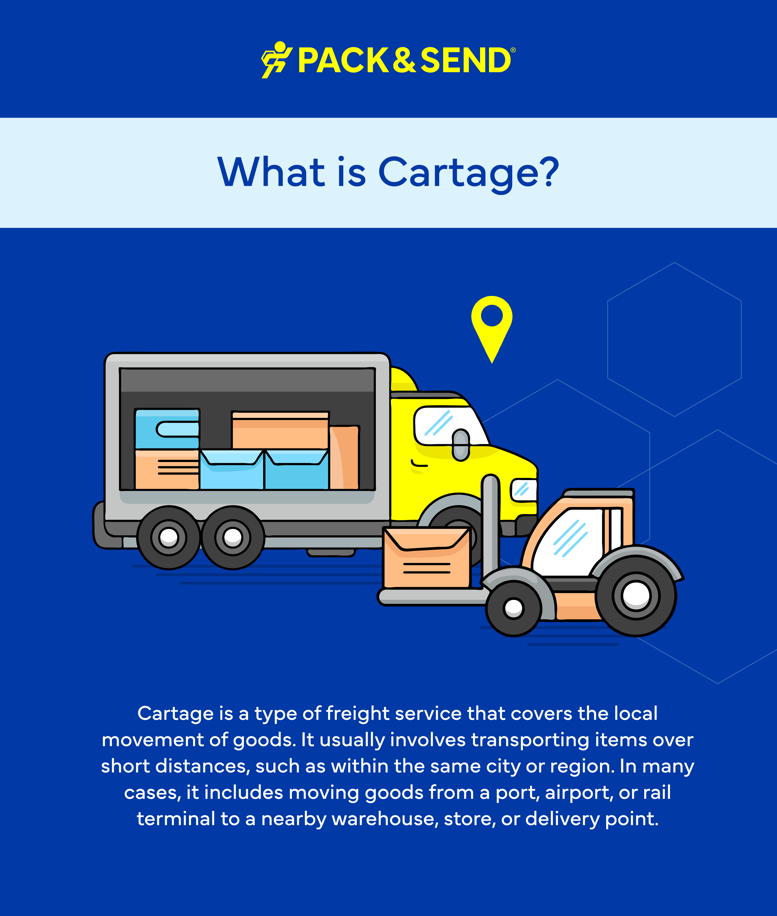
What is Cartage?
Cartage is a type of freight service that covers the local movement of goods. It usually involves transporting items over short distances, such as within the same city or region. In many cases, it includes moving goods from a port, airport, or rail terminal to a nearby warehouse, store, or delivery point.
In simple terms, when you hire someone to move freight from a depot to your business, you are using a cartage service.
This service is common in the early or final stages of delivery. It is often used to connect larger freight operations to local delivery points. That makes it an important part of the logistics chain.
Here are some common features that define cartage transport:
-
Short-distance: Cartage usually happens within city limits or nearby areas.
-
Time-sensitive: Many cartage services support urgent or same-day deliveries.
-
Local support: Cartage is often handled by local carriers or logistics service providers.
-
Final-mile focus: It helps bridge the gap between long-distance freight and end delivery.
-
Versatile: It can include parcels, equipment, pallets, or sensitive goods.
Some shipping companies, like PACK & SEND, offer cartage as part of a larger delivery plan. This helps businesses simplify their shipping needs and ensure better control over delivery times.
4 Types of Cartage Services
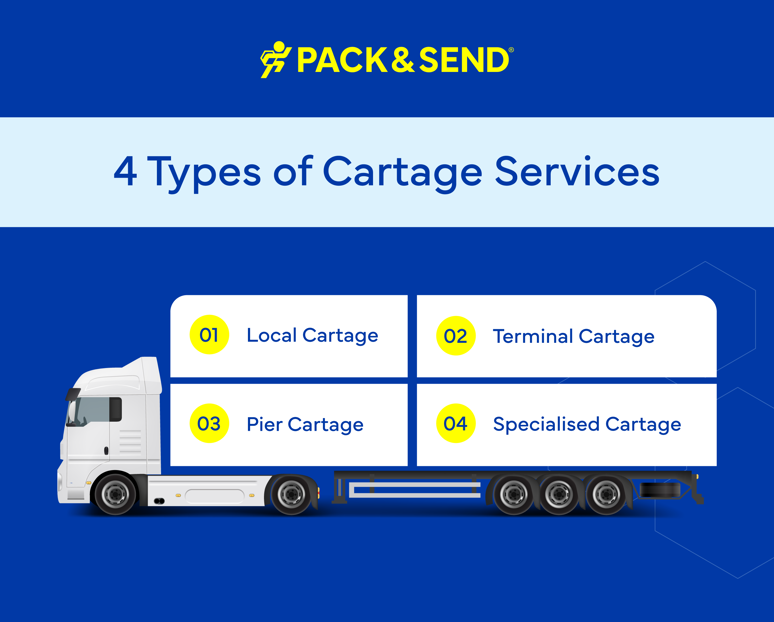
Depending on the origin and destination of the goods, different types of local transportation are used. Here are four common types.
1. Local Cartage
This is the most common type. It refers to moving goods within a city or metropolitan area. For example, a delivery from a local warehouse to a retail store falls under local cartage.
PACK & SEND often supports this type of service by helping businesses manage short-haul deliveries within their city or region.
2. Terminal Cartage
This involves moving goods between transport terminals and nearby locations. For instance, freight arriving at a rail terminal may be moved to a distribution centre a few kilometres away.
It’s often used when freight is handed over from rail to road.
3. Pier Cartage
Also known as port cartage, this service moves cargo from a shipping pier or dock to a nearby warehouse or container yard. It helps connect sea freight to land-based logistics.
Pier cartage transport is common in import and export operations, especially in coastal cities.
4. Specialised Cartage
This type is for fragile, high-value, or oversized items that need extra care. It may involve temperature control, custom packaging, or dedicated vehicles.
Some providers, like PACK & SEND, offer specialised solutions for sensitive equipment, artworks, and electronics.
Understanding the Differences Between Cartage vs Drayage
Cartage and drayage are often confused because they both refer to short-distance freight movement. But they are used in slightly different ways depending on the industry and the type of cargo.
The term cartage usually refers to local goods transport that happens over land (by road) within the same city or urban area. It may include deliveries from a depot to a business, or from one warehouse to another nearby.
Drayage, on the other hand, is more commonly used in port and rail logistics. It refers to the transport of containers over short distances, often between a port and a rail terminal or storage yard. Drayage is a specific type of service used in intermodal freight transport.
Some logistics providers may use both terms interchangeably in casual use. But technically, there is a difference, and knowing this helps when planning or requesting services.
|
Feature |
Cartage |
Drayage |
|
Distance |
Short-range, within city limits |
Short-range, often port-related |
|
Used For |
Local deliveries, business freight |
Container transport (port/rail) |
|
Common Vehicles |
Vans, trucks |
Trucks with chassis for containers |
|
Focus |
Last-mile or local movement |
Intermodal transfer |
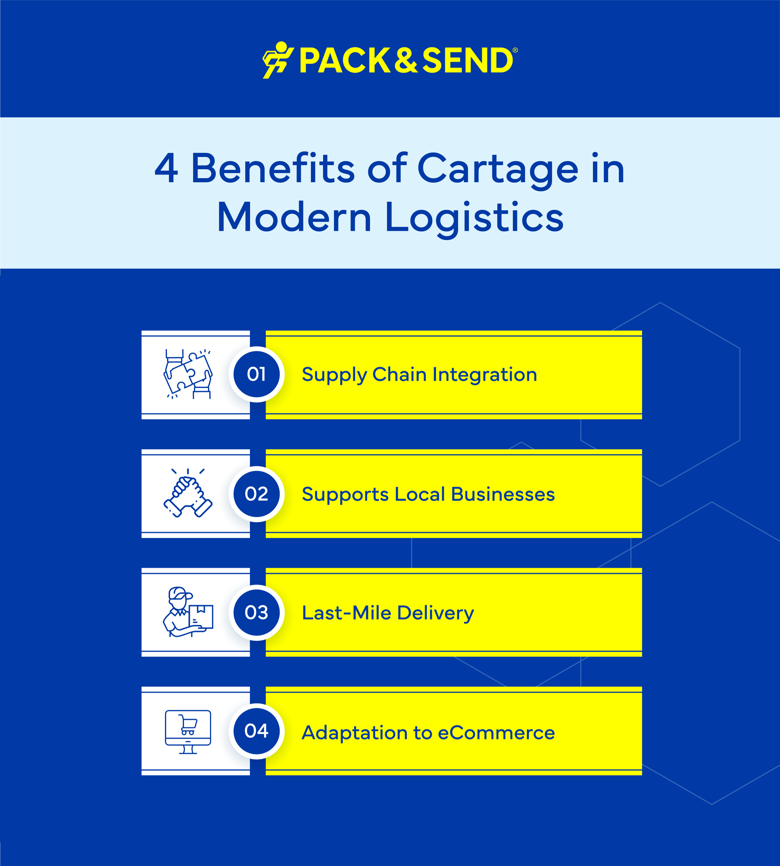
Why is Cartage So Important in Modern Logistics? 4 Important Benefits
Most of us think of freight in terms of big, long journeys, such as cross-country trucking or air cargo routes. But logistics doesn’t work without the small steps in between.
Think of cartage as the glue that holds the rest of the shipping process together. It’s that short but crucial movement of goods that keeps everything flowing.
Here are four ways cartage logistics adds real value to modern supply chains.
1. Supply Chain Integration
A shipping container is arriving by rail. The freight has reached your city, but it still needs to get to your warehouse. Without a local cartage service, that cargo sits idle. That delay creates a bottleneck.
Cartage transport solves this by bridging the gap between large transport hubs and the next step in the supply chain. It ensures continuity, no matter how complex the delivery network.
For instance, if a manufacturer needs raw materials moved from a storage depot to their local factory every morning, that short run is covered by a cartage service. It may only be 15 kilometres, but without it, production stops.
2. Supports Local Businesses
Small businesses need a reliable solution so they don’t have to own delivery vans or hire drivers while moving goods quickly, safely, and often on short notice.
That’s where strong cartage helps. A small florist, for example, might use cartage transport to receive fresh flowers from a nearby market every morning. A boutique retailer might need to move stock from a local warehouse to their city store.
These are short, predictable routes. But they’re vital to daily operations. Local cartage services give these businesses flexibility without the overhead costs of running their own fleet.
3. Last-Mile Delivery
The last stretch of a delivery, often called the last-mile delivery, can be the most challenging. It involves navigating traffic, finding exact addresses, and meeting tight delivery windows.
Cartage freight helps businesses handle this final step. It ensures that what leaves the warehouse actually reaches the customer’s hands.
Take an electronics company, for example. A customer orders a printer online. The item arrives in the city by plane, but now it must travel across town to the buyer’s home. That local movement, often within hours, is powered by cartage.
4. Adaptation to eCommerce
Ecommerce has changed everything. Customers now want faster delivery, better tracking, and fewer delays. In fact, 74% of online shoppers expect their orders within two days, highlighting how speed is now a standard part of the online shopping experience. To meet those needs, sellers must be able to move products quickly, even within the same city.
Let’s say an online brand offers next-day delivery across Sydney. Their warehouse is in Parramatta, and most customers are in the CBD. That’s only a 25-minute drive, but without reliable delivery cartage, next-day promises can turn into refunds and bad reviews.
Cartage enables that quick local delivery. It supports not just B2C order fulfilment but also warehouse transfers, returns, and stock rebalancing between stores.
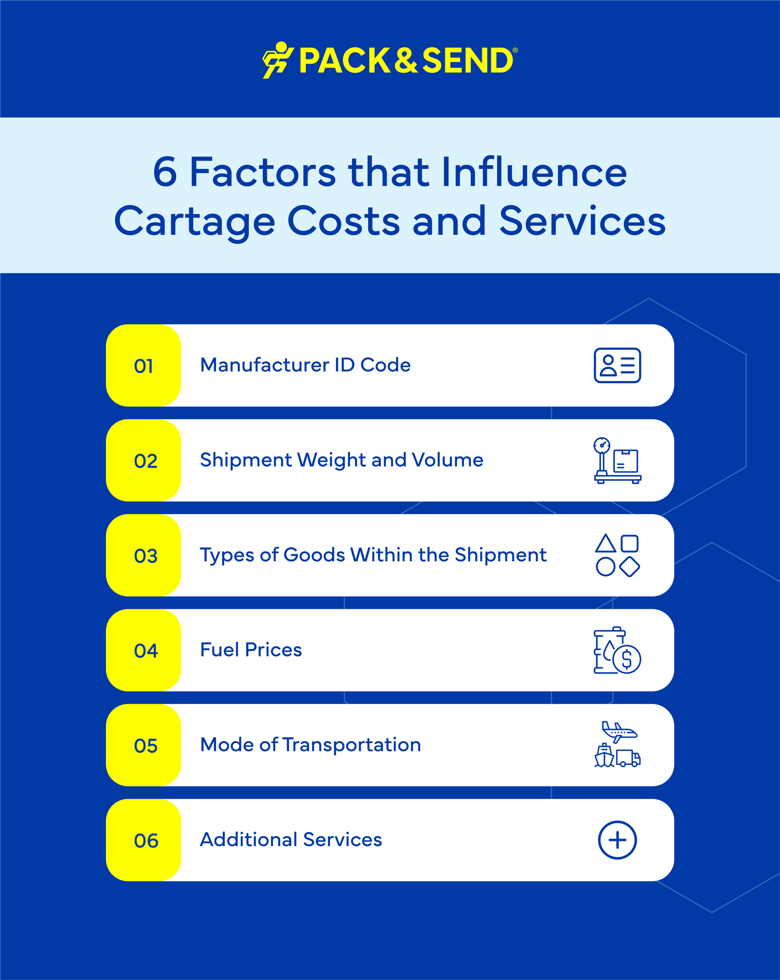
6 Factors that Influence Cartage Costs and Services
Cartage charges can vary quite a bit. Some deliveries cost just a little, while others come with a larger fee, even if the distance is short.
So, what affects the price and quality of a cartage service? Here are six key factors that businesses should keep in mind.
1. Shipping Distance
The most obvious cost factor is how far the goods need to travel. While cartage usually covers short distances, even within a city, longer local routes will cost more.
For example, a business delivering stock from a western suburb of Melbourne to a CBD store may pay less than another that needs goods moved across town during peak traffic hours.
Many providers calculate cartage charges per kilometre, so the further it travels, the more it costs.
2. Shipment Weight and Volume
A small box of cables takes up less space than a full pallet of office furniture. And that affects the cost.
Most cartage freight providers use either the actual weight or the volumetric weight, whichever is higher. Bulky but light items can still cost more because they occupy more space in the vehicle.
If you’re moving large or oddly shaped goods, expect to see a higher cartage fee due to handling and space requirements.
3. Types of Goods Within the Shipment
Not all items are created equal. Fragile, hazardous, or high-value goods often need special handling, equipment, or insurance. That can push up the price of your cartage service.
For instance, a medical device distributor might need temperature-controlled vans or padded packaging to protect sensitive equipment. These custom requests come with additional costs.
PACK & SEND, for example, provides tailored solutions for sensitive shipments that can’t be treated like regular freight.
4. Fuel Prices
Like all transport services, cartage logistics is affected by fuel costs. When petrol or diesel prices rise, so do operating costs for carriers.
That’s why you may notice cartage charges fluctuate even if your route and shipment stay the same.
Some providers include a fuel surcharge, which changes based on weekly or monthly fuel trends. Others adjust base rates every quarter to reflect fuel market conditions.
5. Mode of Transportation
How the goods are moved also affects pricing. While cartage transport is usually falls under road freight, the type of vehicle (van, truck, or tail-lift loader) makes a difference.
For example, heavy machinery may require a flatbed truck with specialised loading equipment. That’s more expensive than using a small van to deliver office supplies.
Choosing the right mode for your load helps avoid unnecessary costs.
6. Additional Services
Many cartage services offer extras like:
-
Express delivery
-
After-hours pickup or drop-off
-
Unpacking or setting up on delivery
-
Signature confirmation
-
Temporary storage
Each of these adds value but also increases the total cost. If your shipment requires more than basic pickup and drop-off, it’s important to budget for these extras in advance.
How Does the Cartage Process Work? 4 Key Steps
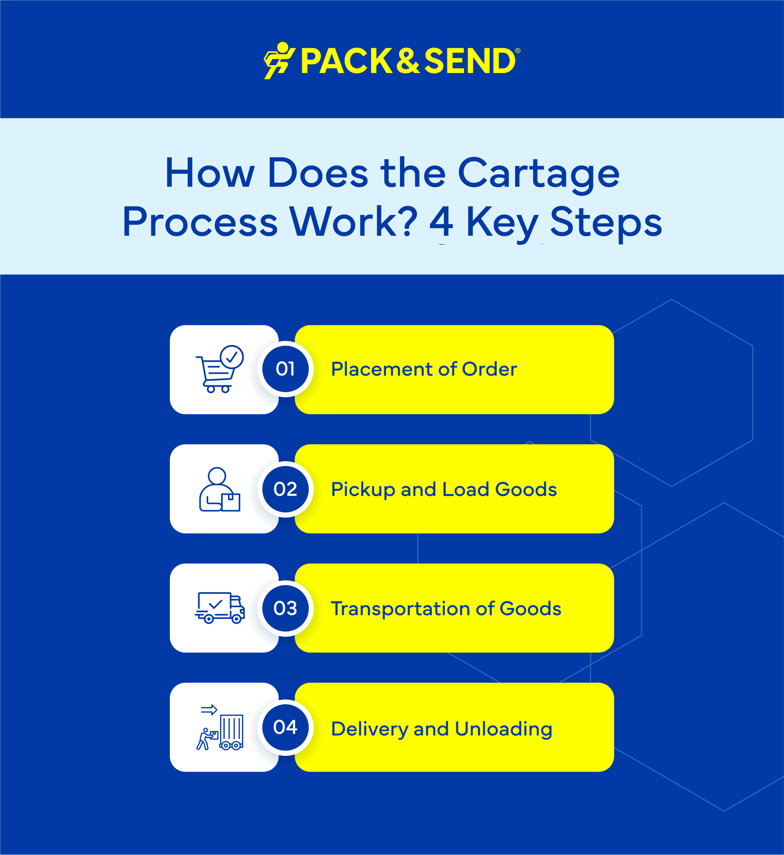
Once a cartage service is booked, the process is usually fast and local, but it still follows a clear structure to keep things on time and on track.
Here are the four main steps in a standard cartage logistics process.
1. Placement of Order
The process begins when a business or individual books a cartage transport job. This could be done online, by phone, or through a logistics platform.
At this stage, you provide key details like:
-
Pickup and drop-off addresses
-
Type and size of goods
-
Delivery time window
-
Any special handling instructions
Companies like PACK & SEND often offer flexible booking options and customer support to make this first step straightforward.
2. Pickup and Load Goods
Next, a driver or local agent arrives at the pickup location to collect the shipment. The goods are loaded into the appropriate vehicle, whether it’s a small van or a larger truck, based on weight, volume, and any special handling needs.
For shipping fragile or sensitive items may be packaged or secured on-site. If the pickup is from a warehouse or freight terminal, coordination is done with on-ground staff to avoid delays.
3. Transportation of Goods
This is the heart of the cartage process. The goods are transported from the pickup point to the destination, often within a few hours.
Because cartage freight usually covers short distances, traffic, road conditions, and time of day can all affect delivery time. Real-time tracking is typically available, especially for higher-value shipments or time-sensitive cargo.
4. Delivery and Unloading
Once the driver reaches the destination, the goods are unloaded and handed over. Depending on the service, this might be:
-
A basic drop-off at a loading dock
-
Hand delivery to a shopfront or office
-
Setup or unpacking for delicate items
A signature may be collected, and the delivery marked as complete in the system. Modern cartage services also offer proof-of-delivery (POD) documents or digital confirmation for business records.
5 Types of Cartage Fees and Pricing Models You Should Know About
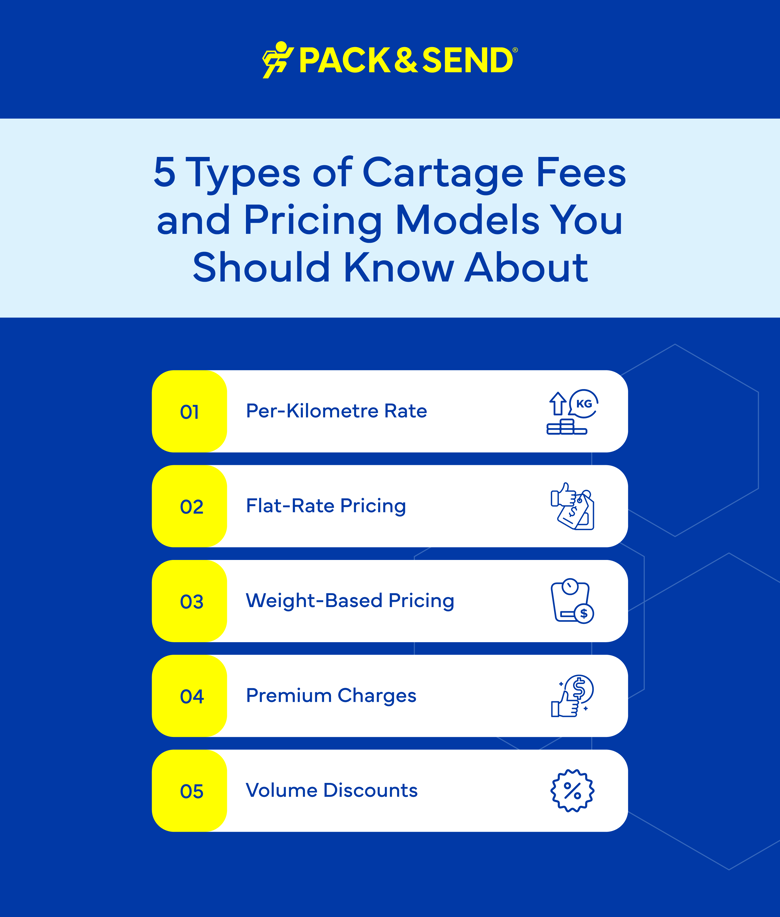
Depending on what you’re moving, how far it’s going, and who’s moving it, you may be charged in different ways. Understanding the pricing models can help you budget better and choose the right option.
Here are five common types of cartage charges used in the industry:
1. Per-Kilometre Rate
This is one of the most common pricing methods for cartage freight. You’re charged based on how many kilometres the goods need to travel. A base fee may apply, with a rate per kilometre added on top.
For example, a business moving stock 15 kilometres across town might pay a standard fee plus $1.50 per kilometre. The more distance covered, the higher the total cartage fee.
This model works well for consistent routes and is easy to calculate in advance.
2. Flat-Rate Pricing
Some providers offer a flat rate for deliveries within a certain area or under specific conditions. This is often used for short, routine cartage jobs where the weight, size, and distance fall within set limits.
It’s a good choice for businesses that want cost predictability. If you regularly send goods across the city, a flat-rate agreement might make budgeting easier.
3. Weight-Based Pricing
In this model, you’re charged based on the actual or volumetric weight of the shipment. This is common for cartage services that move goods from freight terminals to final destinations.
It’s especially useful when handling heavy items or palletised stock. For example, 800 kilograms of building materials would likely fall into a different rate bracket than 80 kilograms of retail goods.
4. Premium Charges
Need urgent same-day delivery? Or after-hours pickup? These fall under premium cartage charges.
These extras cover situations where the carrier has to go beyond standard service. That might include public holiday deliveries, out-of-area routes, or specialised handling for fragile items.
5. Volume Discounts
If you move goods regularly or in bulk, many cartage service providers will offer discounted rates. This is usually arranged under a business account or long-term service agreement.
Volume-based pricing can be a good choice for eCommerce brands or local distributors who send several shipments a day or week. It rewards loyalty and helps control logistics costs over time.
Concluding Remarks
Short-distance freight may seem like a small piece of the puzzle, but it can make or break your delivery timelines. From terminal pickups to local shopfront deliveries, cartage services help you stay on schedule, reduce delays, and improve the customer experience.
Now that you know the cartage definition, the different service types, how it compares to drayage, and what affects cartage charges, you’ll be better equipped to plan your logistics more efficiently.
And if you’re looking for reliable, flexible cartage logistics handled by professionals who know the local landscape inside and out, consider working with an experienced team like PACK & SEND. Get a quote today!
Frequently Asked Questions (FAQs)
What do you mean by cartage?
Cartage refers to the short-distance transport of goods, usually within the same city or region. It's commonly used to move items from terminals, ports, or warehouses to local destinations like businesses or homes. This service plays a key role in local deliveries and supply chain efficiency.
What is the difference between cartage and drayage?
Both cartage and drayage involve short-distance freight movement, but they are used in different contexts. Cartage typically refers to local road transport within urban areas. Drayage is more specific to moving shipping containers between ports, rail yards, or warehouses. In short, cartage is broader and more general. Drayage, on the other hand, is container-specific.
What is cartage and freight?
Freight refers to the overall movement of goods, often over long distances by road, rail, air, or sea. Cartage is a type of freight service focused on short-distance or local delivery. You can think of cartage freight as a smaller, final link in the broader freight chain. For instance, the trip from a distribution centre to the customer’s doorstep (aka last-mile delivery).
What is cartage inwards?
Cartage inwards refers to the cost of transporting goods into a business, typically from a supplier, port, or warehouse to the business’s own premises. It’s often recorded as part of the cost of purchasing inventory. For example, if a company buys raw materials and pays to have them delivered, that delivery cost is called cartage inwards.
What is cartage outward?
Cartage outward is the cost a business incurs when sending goods out to customers or retailers. It’s part of the distribution expense. For instance, when a business delivers products to a store or a customer using its own vehicle or a third-party provider, the delivery cost is recorded as cartage outward.
What are cartage charges?
Cartage charges are the fees you pay for short-distance transportation of goods. These charges can vary based on distance, weight, type of goods, and any additional services required. Whether it's a local delivery from a port to a store or a shipment from a warehouse to a client, the cost of this service is included under cartage fee.
What is a cartage company?
A cartage company is a business that specialises in the short-distance transport of goods. These companies handle local deliveries, often within the same city or region, and help move items between ports, terminals, warehouses, and final destinations. A cartage company may offer services such as last-mile delivery, terminal pickups, and specialised handling for fragile or bulky goods.
Providers like PACK & SEND are examples of companies that include cartage services as part of their logistics offering.