Cyber Protection Centre
Beware of Scams Using the PACK & SEND Brand
- Scammers may impersonate PACK & SEND in emails, text messages, social media messages and fraudulent websites.
- Common scams include fake marketplace-payment services and false parcel-release, customs or delivery fees.
- PACK & SEND does not transfer money between buyers and sellers or request refundable deposits through private individuals.
- Do not act on an unexpected payment or information request until you have confirmed that it relates to a genuine PACK & SEND booking and verified it through an official PACK & SEND channel.
⚠ Received a suspicious PACK & SEND message?
Take these steps to protect yourself:
- Do not pay, reply or follow links in an unexpected message until you have independently verified it.
- Do not provide banking details, passwords or identity documents.
- Verify the shipment using contact details obtained independently from the official PACK & SEND website.
- Forward the suspicious message to fraudalert@packsend.com.au.
If you have paid or shared financial details, contact your bank immediately.
Please note: For a genuine PACK & SEND shipment, the appointed carrier, customs authority or customs broker may contact the sender or recipient about legitimate duties, taxes or clearance charges. This is normal for some international shipments.
Further checks are recommended if the request is unexpected, the shipment details do not match, or the payment method is unusual. Do not rely solely on confirmation from the sender or use contact details supplied in the message. Instead, check the shipment through the carrier’s official tracking service or contact the relevant organisation using details obtained independently from its official website.
PACK & SEND: Protecting Our Customers from Scams
PACK & SEND is a trusted international company with over 30 years of service. Unfortunately, scammers occasionally exploit the trust our brand has earned to deceive consumers and businesses. We are committed to educating our customers and the general public about such fraudulent activities.
Current PACK & SEND Scam Alerts
Marketplace buyer and fake-payment scams
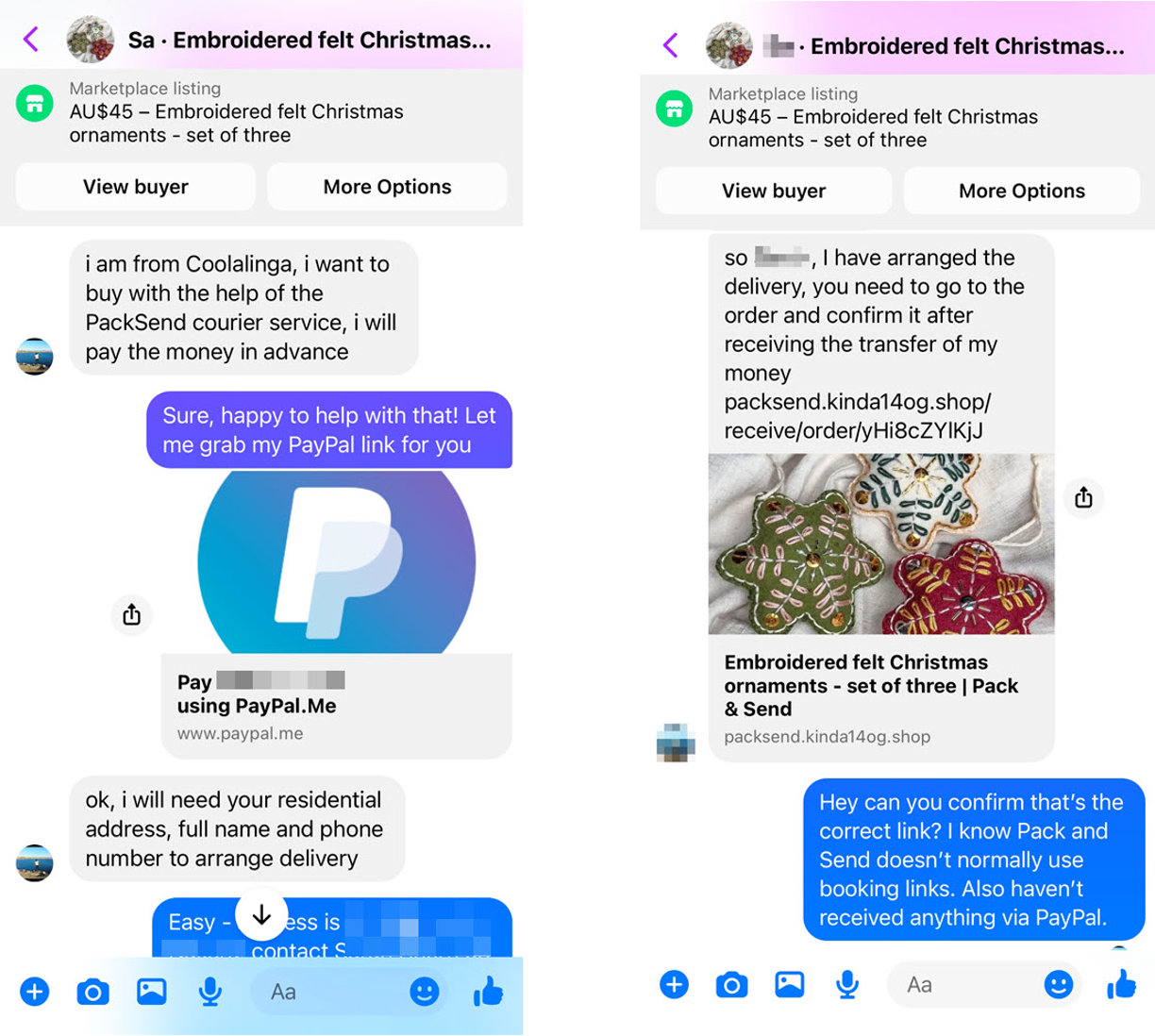
Be cautious of a scam identified by PACK & SEND, where fraudsters pretend to be "buyers" of items listed for sale online. This scam is notably prevalent on platforms like Gumtree, Facebook Marketplace, and similar sites. The scammer will falsely assert that PACK & SEND will handle the online payment and delivery of items. They will attempt to guide the victim through a deceptive process similar to this:
- Buyer/scammer shows an interest in the items for sale, but claims to be unable to make a local pickup or in-person payment.
- Buyer/scammer may claim not to have access to secure payment platforms like PayPal.
- Buyer/scammer suggests that they will pay electronically using a so-called PACK & SEND service, whereby they pay PACK & SEND the agreed price of the item, plus the shipping cost. The seller is led to believe they will receive payment from PACK & SEND, and PACK & SEND will contact them to arrange for the collection and delivery of the item.
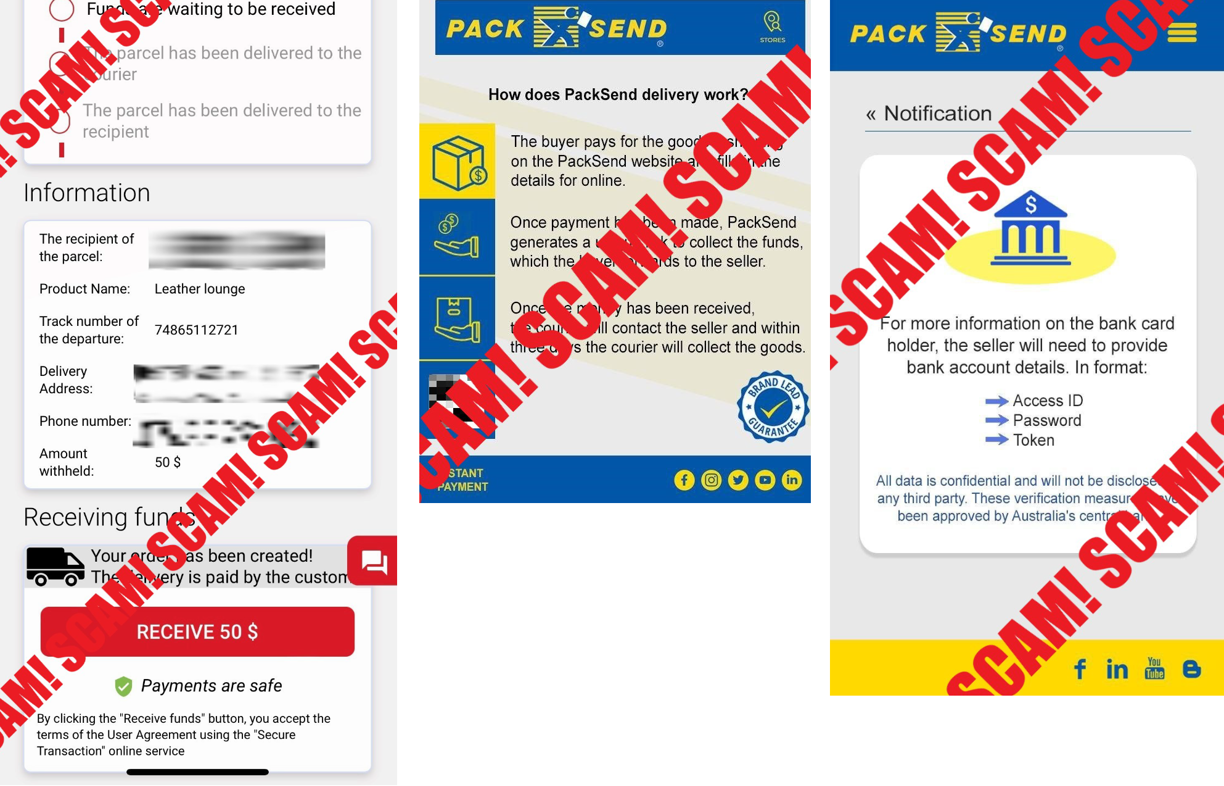
- Buyer/scammer directs Seller to navigate to a fraudulent web page, branded heavily with PACK & SEND logos, imagery and content, promoting the service.
- Seller is encouraged by the website/process, or directly via SMS (or social media messaging services such as WhatsApp) to submit their bank card/bank login details, supposedly to enable them to receive payment from the buyer, via PACK & SEND.
This is the crux of the scam. If the seller enters their bank card or bank login details here, the Buyer/scammer has all they need to charge the sellers credit or debit card, or to extract money from the seller’s account. - In some instances, the scammer may also try to obtain other personal identity information such as date of birth, which may be used for identity theft.
- After this, all communication is blocked by the Buyer/scammer and the Seller has no recourse.
- PACK & SEND does not offer a service to facilitate the transfer of funds between a buyer and seller.
- We will never require you to enter your bank card details in order to receive funds from a third party.
- PACK & SEND will not ask you to provide banking credentials in order to receive money from a buyer or transfer a refundable deposit to a private individual. Legitimate shipping, customs, duty or tax charges may apply to a genuine booking and should always be independently verified.
While PACK & SEND is not liable for the fraudulent actions of third parties, we are working to prevent and detect fraud where possible. Our customer service and legal departments work closely together to inform our customers of these scams and take them down. We also co-operate with international organisations to help prevent these scams.
Here are some example screenshots of images and/or fake websites sent by the scammers to victims:
Here is an example of messages exchanged between a scammer and a victim:
Fake Parcel-Release and Customs-Fee Scams
We have received reports of scammers impersonating PACK & SEND and contacting people who are expecting a parcel. The scammers falsely claim that a payment is required before the parcel can be delivered or released by customs.
Legitimate duties, taxes and customs-clearance charges can apply when a shipment has genuinely been booked through PACK & SEND. In those circumstances, PACK & SEND, the appointed carrier, a customs authority or an authorised customs broker may contact the sender or recipient before the parcel is released. The key difference is whether the request can be independently verified against a genuine shipment.
Warning signs may include:
- You or the sender cannot confirm that the parcel was genuinely booked through PACK & SEND.
- The booking or tracking number cannot be verified through an official channel.
- You are asked to pay a supposedly refundable delivery fee, customs bond or security deposit.
- You are instructed to transfer money to the sender, a private individual or an unrelated account.
- The sender claims the courier’s payment account is unavailable or “on limit.”
- Further payment demands are made after an initial fee has been paid.
- The message threatens immediate penalties, seizure or other consequences to pressure you into paying.
How to verify a payment request
Before paying, confirm that you or the sender genuinely booked the shipment through PACK & SEND. Verify the booking or tracking number through an official PACK & SEND channel using contact information obtained independently from our website.
If a carrier, customs authority or customs broker contacts you about duties, taxes or clearance charges, confirm that the organisation is connected to the genuine shipment. Do not rely solely on links, telephone numbers or payment instructions contained in the message.
PACK & SEND will not ask you to transfer a refundable security deposit to the sender or another private individual so that a parcel can be released.
Here is an example of messages exchanged between a victim and a scammer:

Learn to Recognise Fraud
Protect yourself from fraudulent emails, text messages, social media accounts and websites that pretend to represent PACK & SEND.
So-called “spoofed websites” are fake websites that imitate the look and feel of a legitimate business—in this case, PACK & SEND—with the goal of deceiving users and committing theft or fraud.
Some of these fraudulent websites may closely resemble our real website, using similar branding, language, or layout to trick you into thinking they are legitimate.
Be Cautious of Subdomains
Fraudulent actors sometimes use subdomains that include the word “packsend” to appear trustworthy. For example, a domain such as packsend.example.com or secure.packsend-xyz.com may look official, but it is not operated by PACK & SEND.
Important: If “packsend” appears before another domain name (e.g., packsend.someothersite.com), it is not a legitimate PACK & SEND website.
Only trust websites that end with one of our official domain names listed below.
Official PACK & SEND Domains
- packsend.com.au
- packsend.co.uk
- packsend.co.nz
- packsend.solutions
Emails/Messages Fraudulently Using the PACK & SEND Name or Brand
Fraudulent messages (referred to as "phishing" or "spoofing") are becoming more common and may appear legitimate by incorporating company brands, colours, or other legal disclaimers. It is easy for criminals to impersonate email addresses which may appear as having been sent from a legitimate PACK & SEND account. This does not mean that our corporate systems have been hacked or compromised.
What to do if you think you have been a victim
If you have shared your bank card or credit card details as a result of a scam, it is recommended that you contact your bank to report and cancel the card immediately.
In order to help close down the fraudulent website(s) or email address as soon as possible, and hence preventing any further scams, we ask you to forward the fraudulent email message to fraudalert@packsend.com.au.
Further, we advise you to report the case with the local police. There have been instances that information provided has resulted in arrests.
Please note that in these instances PACK & SEND's name and identity is being used fraudulently. Whilst we sympathise with anyone who may have lost money in this way, PACK & SEND cannot accept any responsibility for any costs or charges incurred as a result of fraudulent activity.
Additional information on online scams can be found at:
Report Fraudulent Messages & Websites
If you have found a website that fraudulently claims to be part of PACK & SEND or have received a fraudulent message or email, we want to hear about it. Forward an example of the site or email to: fraudalert@packsend.com.au. All new information may assist in tracking down the perpetrators.