
Shipping antiques from one location to another safely and efficiently is not as simple as transporting regular goods.
It requires you to prepare the antiques, pack them properly with appropriate packaging and cushioning materials, and ship them through professional shipping service providers.
Now that we have looked at the process of antique shipping, let us proceed with understanding the different types of antiques you may be looking at shipping, before understanding the process of packing and shipping antiques in detail.
6 Types of Antiques You can Ship
Now that we have looked at the definition of antiques, let us look at some of the common types of antiques that people consider shipping:
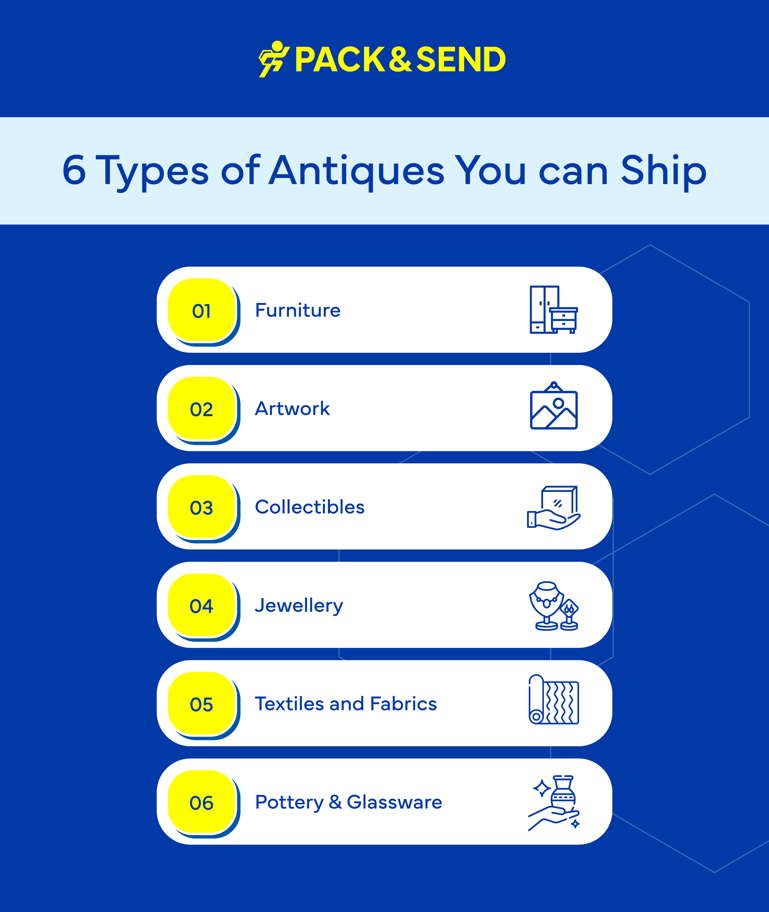
1. Furniture
Furniture is a common type of antique that is shipped across locations.
Decorative chairs and tables, armoires, cabinets, and even beds that have been present in your house for several generations or years can be considered antique.
These items have become more valuable due to their sheer age and sturdiness, but have to be shipped carefully.
2. Artwork
The term antique artwork encompasses different kinds of visual and literary art items such as paintings, sculptures, digital prints/vintage photographs, and even books or pieces of literature that are of significance. These items usually get more fragile with time, and are more complex to ship or transport, especially if they are large or oversized.
3. Collectibles
While some items are priced high because of the materials or techniques used in making them, some are valued higher due to their popularity or rarity.
A collectible may be anything ranging from an ancient clock from the Victorian era, or a tribal relic passed on through the generations. Certain collectibles may lose value if they are not in good condition, but most will only appreciate them, making them highly sensitive goods to ship.
4. Jewellery
For most people, antiques refer to jewellery passed through generations, precious gemstones, or pieces stored away for years, appreciating value.
While most people prefer to carry such items rather than shipping them, some are comfortable shipping them after insuring or buying a warranty from the shipping company.
5. Textiles and Fabrics
Picture a ritualistic garment that has been in your family for generations or a highly valuable fabric/outfit with gemstones or rare artisanal embroidery on it.
While these articles don’t seem as expensive or precious as jewellery or artwork, they are antiques by virtue and may even be too valuable or fragile to transport.
6. Pottery & Glassware
Whether you have a glass vase gifted to your great-grandfather by a king, or an earthen pot you may have bought for an exorbitant price because of its rareness, these are considered highly valuable antique items.
Additionally, because of the material used and their age, they may be quite fragile to touch, let alone ship.
9 Factors to Consider When Packing & Shipping Your Antiques

Now that we have looked at the different kinds of items and products that qualify as antiques in shipping, let us consider the primary factors to consider when packing them for shipping:
1. Value
How much is the antique worth? — this is perhaps the first question you want to ask yourself before you decide to ship it. In some cases, if the antique is worth a lot, you may want to consider transporting it personally instead of shipping it. You may also want to consider a warranty for highly valuable items.
2. Sentimentality
How precious is this antique, emotionally?
Another pertinent question that decides the value of an antique is subjective, based on your attachment or emotions towards it. Antiques that are family heirlooms or a gift from a loved one, may not have a high price tag attached to them, but hold a lot of sentimental value and are irreplaceable. You’d want to ship these goods with utmost care or pack them properly so you can transport them under your care.
3. Fragility
What is the likelihood of the antique getting damaged during transit? — a practical and realistic question you must ask yourself when dealing with antiques made of materials prone to damage, if not handled carefully. Antiques like furniture, glassware, or jewellery may be particularly fragile or have delicate parts that might break while shipping. This is a particularly pivotal factor to consider when selecting the shipping method.
4. Insurance
What kind of compensation can you get in case of damages during shipping?
While this is not a mandatory factor, you must keep insurance in mind when packing and shipping valuable antiques. Check with your shipping service provider and ensure your antiques can be insured before shipping. Notably, PACK & SEND offers a Freight plus Warranty cover to provide appropriate compensation in case of loss or damage to your goods.
5. Current Condition
Is the antique in good condition? — another crucial question to consider when packing and shipping antiques. Assess the condition of your antiques before you pack and ship them, primarily to choose the right packing and shipping method. You should also document the condition of your antiques before shipping so that you can verify it with the delivered shipment and check whether there are any damages.
6. Size
Is the antique regular-sized or oversized? — an important factor to consider when shipping antiques. The size of your antiques will decide the shipping costs, methods, and the packaging material used to wrap them beforehand. Oversized antiques such as furniture can be tricky to ship and require special consideration during the process.
7. Environmental Factors
Will the climate conditions impact the antique?
Certain antiques, depending on the materials they are made of, can be impacted by environmental conditions such as moisture, rain, or even excessive sunlight. For instance, certain antiques may have a delicate finish that can be ruined because of moisture build-up in extreme temperatures. Ensure you consider environmental conditions when shipping antiques, especially across long distances.
8. Uniqueness
How rare or unique is the antique?
Most antiques are unique and each piece may be different in value and condition and require different packing considerations. A professional shipping company ensures you get access to customised solutions and shipping plans based on the nature of your antiques.
9. Disassembly
Can the antique be disassembled?
When dealing with antiques such as furniture or large items, check whether their parts can be disassembled for easy shipping. Ensure that each part of the antiques is carefully wrapped so they can be shipped carefully, especially the ones made of delicate components and materials.
How to Pack Antiques For Shipping
Now that we have looked at the different types of antiques and the factors to consider when shipping them, let us look at the process of packing them properly:
8 Common Materials Used for Packing Antiques
-
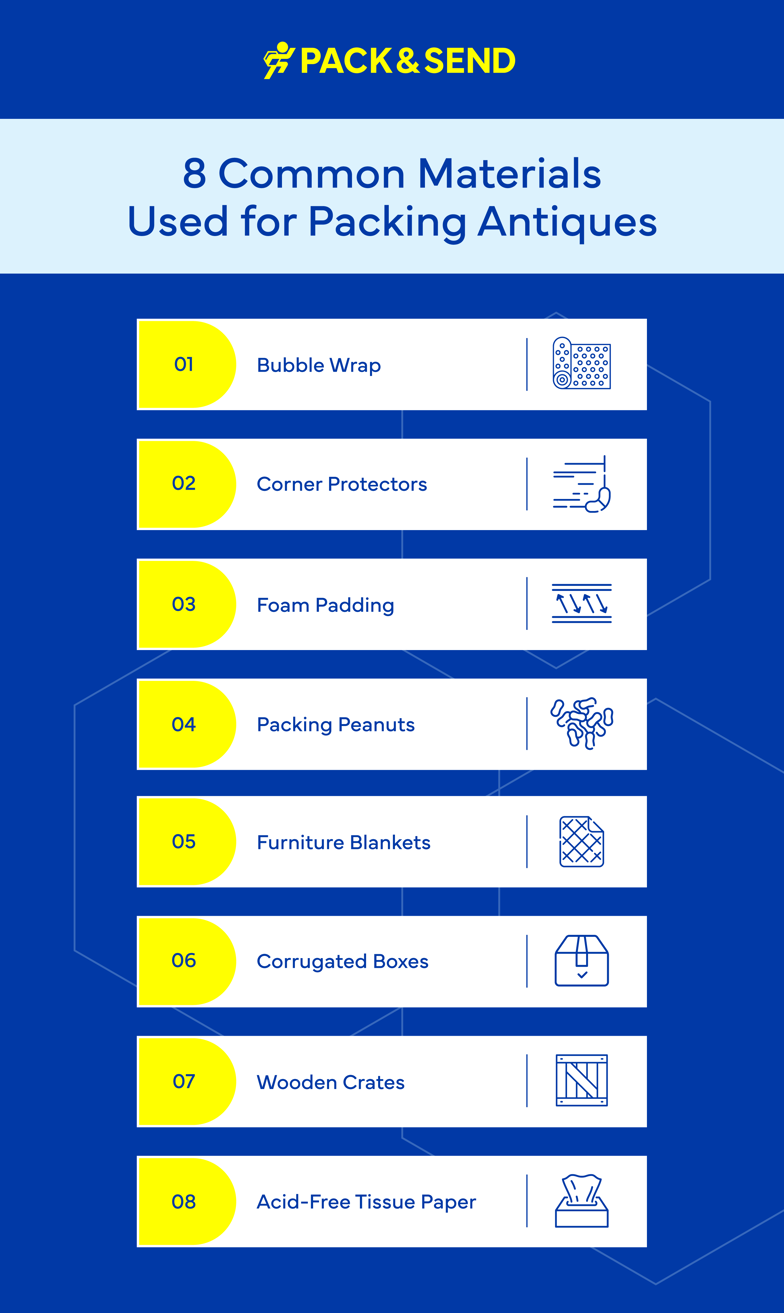
Bubble Wrap: One of the most common materials used in packing antiques is bubble wrap, which is a plastic sheet full of air bubbles that provide cushioning against shocks
-
Corner Protectors: When shipping furniture or antiques of certain dimensions, you may need to use pieces of foam or cardboard as corner protectors for additional cushioning.
-
Foam Padding: When shipping irregularly shaped or delicate antiques, consider using foam sheets and custom foam inserts to protect them from damage during shipping.
-
Packing Peanuts: Tiny, lightweight pieces of styrofoam or other biodegradable materials shaped like peanuts are used as fillers so that the antiques do not move inside the box during shipping.
-
Furniture Blankets: Large antique items such as furniture are first wrapped in thick and padded blankets, thus preventing surface damage during transit and handling.
-
Corrugated Boxes: The most common packaging material made of paperboard is used as the outer packaging box, providing great protection to fragile items as long as there is enough cushioning.
-
Wooden Crates: Custom-made wooden crates can protect valuable or fragile antiques such as paintings or sculptures during shipping.
-
Acid-Free Tissue Paper: Packing paper devoid of the chemicals and acids that can damage specific types of antiques, tapestries, fabrics, and textiles.
3 Pre-Packing Considerations to Keep in Mind for Antiques

Once you have the necessary packaging material to safely and thoroughly wrap your antique, you can start packing it. But before you initiate that process, here are a few pre-packing considerations that you must keep in mind:
1. Appraising the Condition of Items Before Packing
Before you start wrapping, take photos of your antique to catalogue every part of it from every possible angle. This will help you have evidence of its condition before packing.
Once it reaches the destination, you can compare the condition of the received item with the photos to ensure that it has not incurred any damages, even if minor.
Remember that even minor scratches or dents can deplete the value of an antique.
That said, if there are any loose or weak parts or cracks in the antique piece before packing, document these damages so that they are not misinterpreted as damages caused during the handling or shipping.
2. Opting for Warranty or Insurance
When shipping artwork or antiques, getting some kind of guarantee that they will be protected in transit is recommended.
In most cases, this will be in the form of insurance or warranty cover for the item, promising compensation to the shipper in case of any loss or damage to the antique.
In most cases, you must check with your shipping company and can even opt for third-party insurance if it guarantees adequate coverage and protection.
3. Disassembling and Individual Wrapping
When packing and shipping large items like beds, armoires, cupboards or any other furniture item, you have to double down on its packing and protection.
To manage costs and make the shipping process safer and more convenient, consider disassembling the product and wrapping each piece of the antique individually.
If any of these parts are valuable or made of delicate materials, you should label them as fragile, thus ensuring they reach the destination safely.
3 Packing Instructions for Smaller-sized Antiques
Now that you have prepared the antiques for packing, you must ensure they are packed and shipped properly. With that in mind, let us look at some major packing instructions to follow when shipping small antiques:
1. Clean the Antique
Before you pack any item, large or small, you must thoroughly clean every part of it and ensure it is in good condition.
If your antique contains delicate parts, clean it carefully with a brush and stay away from chemicals that might damage the material.
2. Individually Wrap and Box Each Antique
Once cleaned, wrap each small antique thoroughly using bubble wrap and place them individually in a small box. Ensure a snug fit so the antique does not move around the small box and incur damage. Secure the small box with tape.
3. Place In a Larger Box With Cushioning
Once packed and secured with tape, try to pack multiple small boxes containing antiques, in a much larger box.
This large box must have cushioning material and fillers to ensure that the boxes don’t move around in transit and that the integrity of the antiques is preserved. Lastly, add appropriate labels.
4 Packing Instructions for Larger-sized Antiques
Now, let us look at the packing instructions to be followed when packing large antiques:
1. Prepare the Antique
The first step in packing large antiques for shipping is to prepare them appropriately. This involves checking whether the antique contains any fragile parts or has any existing damage. You will then document the condition with photos for insurance purposes. You must also clean the antique using a microfiber cloth to remove dust and ensure you stay away from chemicals that might damage its condition.
2. Examine Detachable Parts
Large items often have detachable parts that can be removed to facilitate easy packing and shipping.
If the antique you are packing also has such parts, remove any detachable parts such as handles, legs or panels to reduce the risk of damage during transit.
Remember to pack each part properly in bubble wrap or foam padding and pack them along with the other parts of the item in the main packaging box.
3. Pack and Cushion Antiques Carefully
When dealing with large antiques like furniture items, the first layer of packing is covered by blankets. Cover the antiques with these blankets and surround them with moving pads to prevent scratches or surface damage.
Once covered with a blanket, you can wrap it more thoroughly using bubble wrap so the antique does not absorb any shock during transit.
Not to forget, bubble wrap will add more cushioning if you are placing the antique into a box. Additionally, you must use cardboard or foam corner protectors to protect the edges of the antiques from any impact.
Additionally, consider packing the antique in a wooden crate or cardboard box so it is a snug fit and use packing peanuts or paper as fillers to restrict movement.
4. Label the Items
Once packed, all you have to do is add appropriate labels to the package. If your antique is made of delicate material or has sensitive parts, be sure to label it as “Fragile”. Also, indicate which way is up so that it is handled with appropriate care during transit.
7 Effective Methods to Consider When Shipping Antiques

Once your antique is wrapped and packed properly, it is ready to be shipped, however, you must choose the ideal shipping method to ensure the timeliness and safety of your goods. That said, here are some of the best way to ship antiques locally and internationally:
1. Professional Antique Shipping Service
Among the plethora of courier and shipping service providers in the market, there are professional antique shipping service providers specialising in safely packing and transporting antiques from the origin to the destination location.
When you opt for this option, you only have to hand over your antique to them, while they take care of the rest.
2. Air Freight
When you want to ship your antique from one place to another in the shortest duration possible, air freight may be the best shipping option at your disposal. Not only does it expedite delivery times, but also the most expensive shipping option.
3. Ocean Freight
If your antique is on the bigger or heavier side, or if you are dealing with bulk shipments, you need to utilise large containers or pallets for shipping, making ocean freight the ideal option. They are also most likely to have the necessary equipment and skills to transport large loads safely.
4. Land Freight
If you are looking for a cost-effective option to transport your antiques, which is often the case when dealing with a large number of shipments or domestic transit, you may opt for land freight. It is also perfect for your needs if you don’t have any time limitations for delivering the antique.
5. White Glove Service
Often chosen by customers who want to ship precious antiques, white glove services is a premium shipping option that provides exceptional quality of care and service while shipping your item. They take care of everything from packing to delivery at the destination, along with superior customer service.
6. Container Shipping
If your antiques fall into the category of items that could be negatively impacted or damaged by climate conditions or moisture, container shipping is an ideal option for you. Your antique will be placed in a sealed container, protecting it from all kinds of external elements.
7. Consolidated Shipping
Smaller antiques are often combined into a larger shipment when they are being sent to the same destination. It is a cost-effective shipping option that will help you reduce chances of misplacement and are highly efficient.
Documentation and Legal Considerations Associated With Shipping Antiques: 4 Things to Keep in Mind
Whether you are shipping antiques across the country or borders, there are certain legal and compliance documentation requirements that you must consider at all costs:
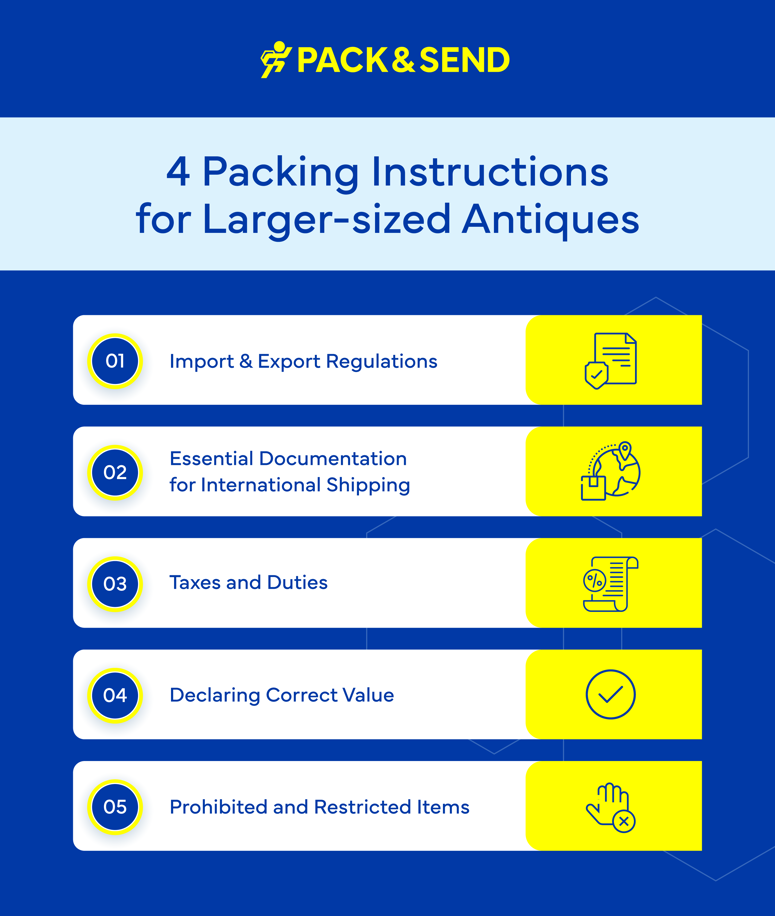
Import & Export Regulations
If you want to ship your antiques internationally, you must conduct thorough research on the import regulations of the destination country and any countries in transit.
If your antique is made of materials from endangered species or holds cultural value, specific countries are likely to have specific restrictions and laws.
Essential Documentation for International Shipping
Aside from learning about the regulations and restrictions related to international shipping in the origin and destination countries, here are some of the most essential documents you should prepare for the process:
-
Bill of Lading that establishes the transfer of ownership of a specific antique from one party to another
-
Certificate of Authenticity that proves the provenance and originality of your antique
-
Export/Import permits that allow you to import or export antiques between origin and destination countries
-
A commercial invoice that specifies the transaction date, NAP details of the seller and buyer, and description of the goods
-
Customs forms in case the antiques are being transported internationally
Taxes and Duties
When shipping antiques domestically or internationally, you must research the taxes, duties and fees associated with the process. Most shipping costs are incurred by recipients, however, maintaining complete clarity and transparency in communication and establishing conditions is crucial to the success of antiques shipping.
Declaring Correct Value
Your antiques are most likely highly valuable, making it even more important to declare their accurate and correct value.
By under-declaring or overestimating the value of your antiques, you can prevent any major hurdles during customs inspections.
Prohibited and Restricted Items
When shipping antiques overseas, you must be aware of any materials or items that may be prohibited or restricted in the destination countries.
Depending on the nature of your antique, they may include materials such as ivory, materials from endangered species and more, that may violate local or international laws.
Concluding Remarks
The process of packing and shipping antiques is tricky primarily because of their rareness, value and in some cases, even sentimental value. Whether you are shipping locally or internationally, antiques should be handled with utmost care, and you must implement mechanisms that prevent loss or damage to them.
Finding the right antique shipping service provider will help you rest assured about the safety of your antiques.
Get a quote from the PACK & SEND website to get an estimate on shipping antiques locally within Australia or internationally.
Frequently Asked Questions (FAQs)
1. How to ship antiques?
You must be extra careful when shipping antiques from an origin location to a destination location by purchasing coverage. Right from choosing the right packaging material to picking the right shipping method, there are several steps to ensuring that your antiques are shipped effectively and safely.
2. How to ensure the safety of antiques while shipping?
Ensuring the safety of your antiques during shipping has a lot to do with picking appropriate packing and cushioning materials. Additionally, consider purchasing insurance or warranty cover that will help you get compensation in case of damage or loss to your antiques during transit.
3. Can the postal service ship antiques, fine art and collectibles?
Yes, the Australian Postal Service (APS) is capable of shipping antiques and collectables, however, you need to be aware of the restrictions associated with the process and ensure including the necessary packaging and declaration.
4. Who can ship antiques, fine art and collectibles?
While not all courier service providers are capable of shipping antiques and artwork, you can take the help of antique service providers, white-glove service providers, and third-party freight service providers to facilitate the process.