
Are you searching for ways to optimise your product shipping process?
Well, then you need to consider the various ways in which you can improve and elevate your packaging process. After all, it is one of the simplest processes to optimise and take complete control over, for any online retail business. This makes sense also because your packaging most likely contains your branding, and the critical information required in the shipping process.
With that in mind, let us now look at what on-site packaging means, the benefits it offers, and some of the most powerful tips you can follow while packing your products safely and quickly:
Understanding On-site Packaging
Right off the bat, we must establish that onsite packaging can mean different things for you, depending on the nature of your business.
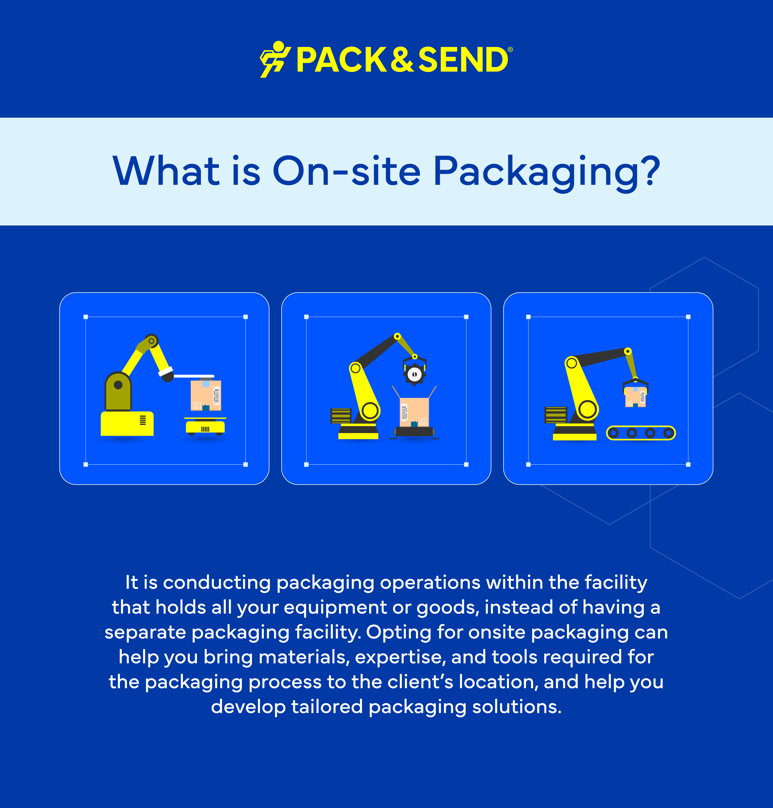
By definition, onsite packaging refers to conducting packaging operations within the facility that holds all your equipment or goods, instead of having a separate packaging facility.
Opting for onsite packaging can help you bring materials, expertise, and tools required for the packaging process to the client’s location, and help you develop tailored packaging solutions.
With onsite packaging services, choosing the right packaging based on the size, shape, and nature of your goods becomes easy.
Moreover, on-site packaging is a requirement and a preferred strategy for businesses that usually deal with large, heavy, sensitive, or oddly shaped goods that might require custom packaging and want to establish a more efficient logistics process.
19 Powerful Tips to Handle Your Product Packaging Effectively
Since we have now covered the basics of on-site product packaging, let us explore some of the most powerful tips that will help you navigate the process effectively:
1. Choose the Right Packaging Materials for Your Goods
The effectiveness of your product packaging relies more on its applicability to your goods than on any other factor.
By selecting packaging materials that are right for your product’s characteristics and shelf life, you can protect it from damage, enhance customer trust, reduce costs, and even increase its durability.
For example, if your shipment contains valuable or sensitive items, you may need to use corrugated cardboard packaging, while paper or card wrapping works perfectly for dry and lightweight goods.
2. Opt for Standardisation of Your Packing Process
Standardising your packaging processes and materials can help increase efficiency, reduce the overall packing costs, and strengthen the consistency and image of your brand. Standardisation can also help you streamline your logistics process and significantly improve its accuracy.
In fact, for a manufacturer, standardisation can also help achieve bulk purchase savings and increase recyclability rates.
For example, think about the iconic blue colored, branded box used by Tiffany & Co, which is now a symbol of luxury and consistency. Most people across the globe associate it with the brand without requiring any additional information.
3. Prepare for Peak Periods and Sales in Advance
Peak seasons, holidays, and sales periods are quite challenging for retail businesses that go into it unprepared.
Consider preparing in advance by training your staff, organising storage, and securing the necessary packaging supplies.
Doing so can help you prevent delays and ensure smoother operations even when your order volumes increase.
You can analyse your past performances during peak periods and refine your processes to be better aligned with customer expectations, thus minimising returns.
4. Use High-Quality Materials for Packing and Cushioning
As we already discussed, using high-quality packaging materials can help you safeguard your goods against most types of damage during transit.
Some common packaging materials include foam inserts, bubble wrap, and sturdy boxes that help you protect your shipment against shocks and drops.
Using durable packaging materials can reduce product damage and return rates, directly increasing customer satisfaction levels and cost savings.
In case you are shipping fragile or highly valuable items, consider investing in premium cushioning and wrapping materials. Bear in mind that high-quality packaging translates into lower return rates.
5. Consider Adding Branded Tissue Paper and Wrapper
If you can’t wait to level up your branding and elevate your value and recognition among customers, using branded packaging might be a great idea.
Using branded tissue paper and wrappers can not only improve the unboxing experience for customers but also reinforce your brand identity.
Even the smallest upgrades to your packaging can increase the perceived value of your product and encourage social sharing, which are both great things for your bottom line.
Moreover, branded packaging also adds to a more premium purchase and unboxing experience, and thus is favoured by customers across the world.
6. Opt for Sustainable Packaging Materials to Pack Products
As consumers grow more environmentally conscious, it is necessary for brands to embed sustainability into all their core business processes.
It is important to consider that the sustainable packaging market is projected to be valued at nearly $470 billion by 2027.
For eCommerce stores and online retailers, using sustainable packaging materials such as biodegradable plastics, recycled cardboard, and kraft paper can go a long way in reducing the carbon footprint.
Aside from this obvious benefit, eco-friendly packaging material and practices can also appeal to environmentally conscious customers.
7. Wrap Individual Items in a Package to Avoid Damage in Transit
Are you sending multiple goods within an LTL shipment to manage costs? Or do you have to disassemble a much complex product into smaller parts that need to be wrapped individually?
You can individually wrap each item or every part of it to prevent scratches, cross-contamination, and even breakage of your goods.
Ensure that this is specifically applicable to fragile items or multi-item shipments that are easier to handle in the shipping process.
Doing so can help you substantially reduce your in-transit damage claims, and you can evenly distribute your weight using dividers or inserts.
8. Include Promotional Materials and Communication
There are several effective ways to elevate your overall customer experience and engagement through your packing and shipping process.
In fact, most customers who receive promotional materials with their orders are likely to purchase from that retailer again.
Add promotional details, flyers, coupons, or thank-you cards to your shipment to drive repeat purchases and boost customer engagement.
For example, by including discount coupons valid for the next three months with your customer’s order, you can encourage them to shop from your store again. Check whether your team or shipping provider can arrange such custom packaging solutions.
9. Add a Packing Slip to Your Shipment
In most cases, regardless of the nature of the goods you are shipping, it is a good idea to include a packing slip containing important details.
Including a detailed packing slip along with your shipment ensures order accuracy and can help in processing returns and building trust among your customers.
Following the correct format for your packing slip can help both your customers and team to not only verify the contents of your shipment, but also improve transparency and reduce disputes.
10. Add an Appropriate and Detailed Shipping Label
Designing accurate and detailed shipping labels that include clear addresses, barcodes, and handling instructions is crucial for timely and correct deliveries.
Mislabeling your shipments can lead to lost or delayed packages, and even reflect negatively in your bottom line if uncontrolled.
For instance, if you are shipping electronic items that have several fragile parts, consider labelling the shipment as ‘Fragile’ or add handling instructions to prevent damage during transit.
You can even consider automating the creation of shipping labels to save time and avoid any expensive labeling errors.
11. Write Custom Notes to Include in the Package
While we have already discussed the merits of including coupons and thank-you cards within your shipment, writing custom notes is a great way to personalise your package for your customers.
A handwritten note can make customers feel special and motivate them to make repeat purchases from your store.
12. Consider Implementing Seasonal and Custom Packaging
Shipping out potential presents during the holiday season? Wrap your goods with Christmas-themed paper and boxes.
Shipping out floral arrangements and confectioneries in February? Consider adding a Valentine’s Day-themed element to your packaging.
These might sound like insignificant and time-consuming ways to complicate your packaging process, but such seasonal or custom packaging can help you create excitement among customers.
You can boost your sales significantly during peak periods with the help of some of these easy fixes and easily differentiate your brand in a crowded market.
13. Consider Personalising With Stickers and Custom Packing Tape
If you are competing with existing online retailers and want to deliver a more tailored experience to customers, on-site packaging can help you navigate the process smoothly.
If you don’t want to invest in custom cardboard boxes or outer-packaging envelopes, you can make do with stickers and packing tape.
Simple actions such as using personalised packing tape or relevant stickers can help you enhance brand recall and encourage customers to create and share unique unboxing experiences online.
14. Add Free Samples and Gifts
Along with promotional coupons or notes, you can also add free merch samples and gifts to your shipment.
You can add a unique, branded touch to your packaging with small branded gifts that can enhance brand recall and encourage your customers to try other products from your online store.
This simple strategy can help you significantly boost repeat purchase rates.
15. Prevent Delays by Getting Your Shipping Details Right
By not including the right information on your shipment and labels, you can end up facing costly delays and even lost packages.
Your shipping information should be updated and accurate, and free of manual data errors.
You can leverage automated systems to help maintain the accuracy of your shipping information and eliminate manual entry errors.
16. Use Non-Hazardous Packaging Material If the Package is Going to be Accessed by Children
When you take complete control of the process with on-site packaging, you get to have executive control over most of its aspects.
This means that you can handpick the materials to include as part of your packaging, as long as they are aligned with the requirements of your goods.
If there is a chance that the shipment might be handled or unboxed by children, you must be even more careful and opt for only non-toxic, child-safe, and non-hazardous packaging materials.
Doing so will also help you comply with safety standards, protect your brand from liability, and enhance trust with families.
For example, if you are shipping toys for children, avoid packaging that contains harmful chemicals and toxins.
17. Avoid Leaving Empty Spaces in Your Package
We have talked enough about packaging for you to know that using proper cushioning material for your shipment is not only desirable, but essential.
Leaving empty spaces in your shipment can cause items inside it to shift and get damaged during transit.
Using packaging boxes that are properly sized and placing void-fill materials such as air pillows or paper balls can reduce damage rates and overall shipping costs by optimising package dimensions.
18. Aim for Continuous Improvement in Packaging
Packaging is far from a one-time solution, and requires you to review and tweak the packaging performance regularly.
Proactively gather customer feedback, and stay updated on the new materials and technologies to manage your packaging performance and its impact on customers.
Implementing continuous improvement can also lead to cost savings, better sustainability and elevated customer experience.
For example, you may be using corrugated cardboard boxes for packaging currently, but if your shipments are getting damaged in transit, it is time to upgrade to a crate or add additional packaging layers.
19. Leverage Automation in Packaging
As a rule of thumb, if any of your processes are prone to a lot of errors, implementing automation should be on your to-do list.
Because a typical packaging process has multiple steps, it is also prone to manual errors that can hurt performance and revenue.
Opting for automation such as conveyor belts, on-site service packaging machine/packing machines, and automated labellers can not only help you become more accurate but also more efficient and scalable.
4 Major Benefits of On-Site Packaging
Aside from understanding what on-site packaging means, it also bodes well for you to know about the advantages you can gain from this approach, so that you can make an informed decision. Here are the most important ones you should know about:
1. Enhanced Product Safety
Packaging your goods at the origin location can help you gain more control over the packaging process and ensure that your goods are packed securely.
You can also ensure that your goods are packed according to their specific requirements to reduce the risk of damage or loss during transit. On-site packaging is especially suitable for items that are fragile, valuable, or complex.
2. Increased Cost Savings
Aside from the increased effectiveness of onsite packaging, the approach is also great when you want to eliminate or reduce the overall packaging and shipping costs.
You no longer have to bear additional expenses to transport goods to a packaging facility, further reducing the handling required in the process. As a result, you can limit the risk of damage and related expenses.
3. Increased Productivity and Efficiency
Managing your product packaging can boost productivity by streamlining operations and shortening your turnaround times.
On-site packaging can also help you react promptly to evolving market demands and improve your overall logistics workflow by boosting overall productivity and facilitating faster deliveries.
4. More Flexibility and Customisation
On-site packaging is ideal for businesses that want to add their branding and customise their packaging to be tailored to their needs.
When done right, your on-site packaging process will help you incorporate specialised padding, custom crating, and any unique handling instructions effectively.
You can even customise your packaging process to adapt to customer preferences, new products, and seasonal changes.
Importance of Choosing the Right Packaging for Your Products
As you may have realised by now, the biggest perk of implementing onsite packaging is getting specific and tailored packaging right for your business. What’s more, since packaging is one of the few direct customer touchpoints you have in your control, all your stakeholders, including sellers, buyers, and the e-commerce platform, can benefit from it.
By designing and implementing the perfect onsite packaging process, you can leverage this touchpoint to make a last impression on your customers.
Primary, Secondary, Tertiary, and Ancillary Packaging
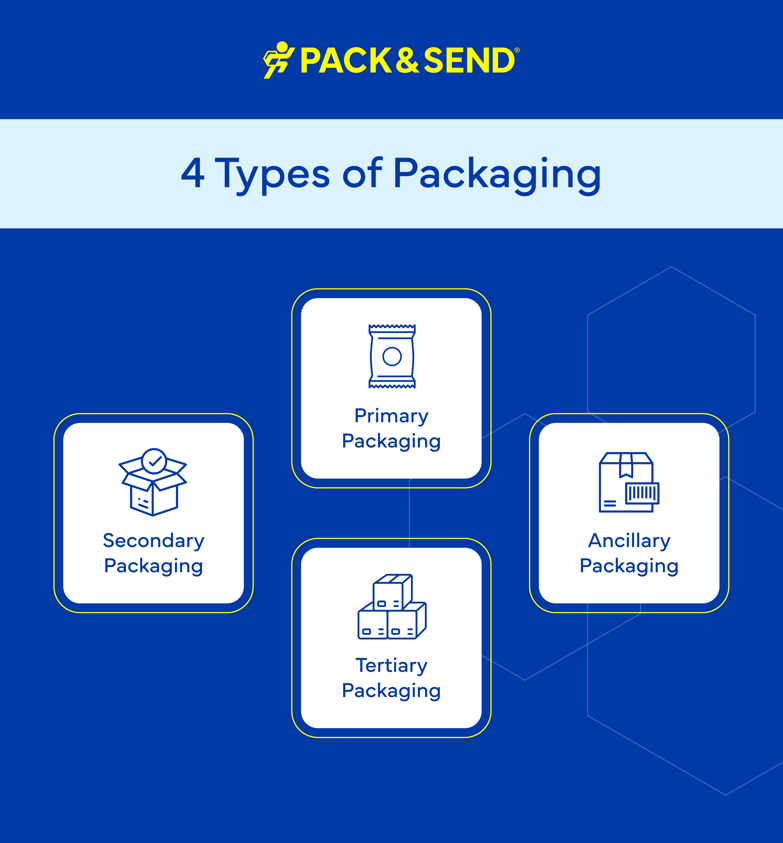
For any product or item that you are selling and packing, there are four layers of packaging you should know about. Each of the following four packaging layers plays distinct roles in grouping, transporting, protecting, and supporting products during transit.
1. Primary Packaging
The layer of packaging that is directly in contact with the product is known as primary packaging, also known as retail packaging.
It is the last layer that the customer will come in contact with while unboxing, and its primary purpose is to protect and preserve the product against contamination, moisture, or bacteria.
2. Secondary Packaging
This layer of packaging, which binds multiple products or pieces of the product to combine into a single SKU, is known as secondary packaging.
The secondary packaging surrounds the primary packaging to provide additional protection, manage handling, and simplify the storage and transportation of goods.
3. Tertiary Packaging
The outermost layer that is used to group and secure secondary packaging units for handling and transportation is known as tertiary packaging.
This packaging material is used in logistics and distribution, and facilitates the safe movement of goods through the supply chain and even helps you optimise warehouse storage.
4. Ancillary Packaging
Any supplementary equipment or materials that add more value and enhance the effectiveness of your packaging operation are known as ancillary packaging.
Some common examples include glue dispensers, modular packaging lines, conveyors, and even barcode scanners.
Understanding Packaging for Different Types of Products
1. Small Items
Small packages are usually parcels with lesser dimensional weight and can be transported easily through air or land.
To ensure its safety, these packages should be placed in a cardboard box filled with cushioning material. Next, they should be safely secured with tape and labelled according to the regulations and requirements.
You are generally better off opting for a freight partner or courier service provider for one-time small packages that do not weigh much or take up much space.
2. Oddly Shaped Items
Oddly shaped items such as furniture, musical instruments, or sculptures are trickier to pack. Opt for packaging materials that will help you adequately wrap the product before placing it in a cardboard box while shipping.
Tape cushioning material, such as air pillows or packing peanuts, for additional cushioning during transit.
For bigger packages, you can place multiple units in one cardboard box, but you must double-check that no sharp edges are exposed with on-site foam packaging, the strength of the cardboard box, and attach relevant labels.
3. Large Items
Large and bulky products require more care and can be tricky to transport across long distances.
You must start by opting for durable packaging such as corrugated cardboard and add an adequate amount of cushioning material within the box.
Doing so will help you prevent external shocks and damages due to jostling.
Ensure that you weigh the shipment and use a pallet to move it within the facility so you can handle it properly during loading and unloading.
Before shipping the package, shake the box to check if the contents are moving, and add more cushioning to prevent any damage to the goods.
4. Fragile Items
Fragile items need to be wrapped and packed thoroughly, even before the packaging process begins.
If the product packaging is not adequate to maintain its integrity, use plastic or paper sheets to prevent them from unraveling, and secure with tape.
Choose the right-sized box that leaves room only for cushioning and very little for the product to move. Add as many layers of packaging as necessary and ensure that you use high-quality materials to safeguard your items.
Costs Associated With Product Packaging
One of the biggest applications and use cases of onsite packaging is when businesses want to create a custom-branded experience.
Remember to balance your packaging quality with profit margins, as custom packaging, if not controlled, can quickly start piling up costs.
If you are working with a tight budget, consider using your standard packaging with custom stickers to provide a branded experience without incurring too many costs.
However, for a fully branded experience, you may have to upgrade to custom-branded boxes and mailers, which will be a more expensive solution.
Concluding Remarks
Your product and shipment packaging is not just about protecting your goods. It is also about understanding the expectations of your customers, and elevating their purchase experience. A lot of brands prefer onsite packaging as it allows them complete control over their packaging process, and helps them curate personalised packaging experiences for customers.
That said, it is important to get the packaging right so that it adds efficiency to your overall supply chain process.
Frequently Asked Questions (FAQs)
1. How do you package safely?
Depending on the nature of your products, their fragility and handling requirements, safe packaging can look different for your business. Generally, safe packaging refers to choosing sturdy, high-quality packaging materials that can protect your product from external damages during transit, and ensure intact delivery at the destination.
2. What is product packaging?
The primary and secondary packaging layer that protects the product from external contact and displays the branding of your business is known as product packaging.
3. What are the main functions of product packaging?
Product packaging, when correctly done serves multiple purposes such as: protecting the product, promoting the product and brand, provide additional information about it, and offer convenience and satisfaction to customers.