
In 2026, global e-commerce retail sales are projected to reach between 21.1% and 21.8% of total worldwide retail commerce.
Despite this explosive growth, the evolving customer expectations and expanding business operations are posing a lot of challenges for growing eCommerce stores.
What’s more, modern customers are also more informed and expect increased speed, convenience, and transparency in communication.
In fact, more than 77% shoppers around the world are likely to abandon their purchase or shopping cart if the delivery options are not in line with their expectations. In such a situation, the right delivery partner can make all the difference between a successful and failed delivery.
Before we delve deeper into the process of choosing the right delivery partner for eCommerce, let us first explore the reasons that make it important to do so.
Why is Choosing the Right Delivery Partner for Ecommerce Crucial for Your Business?
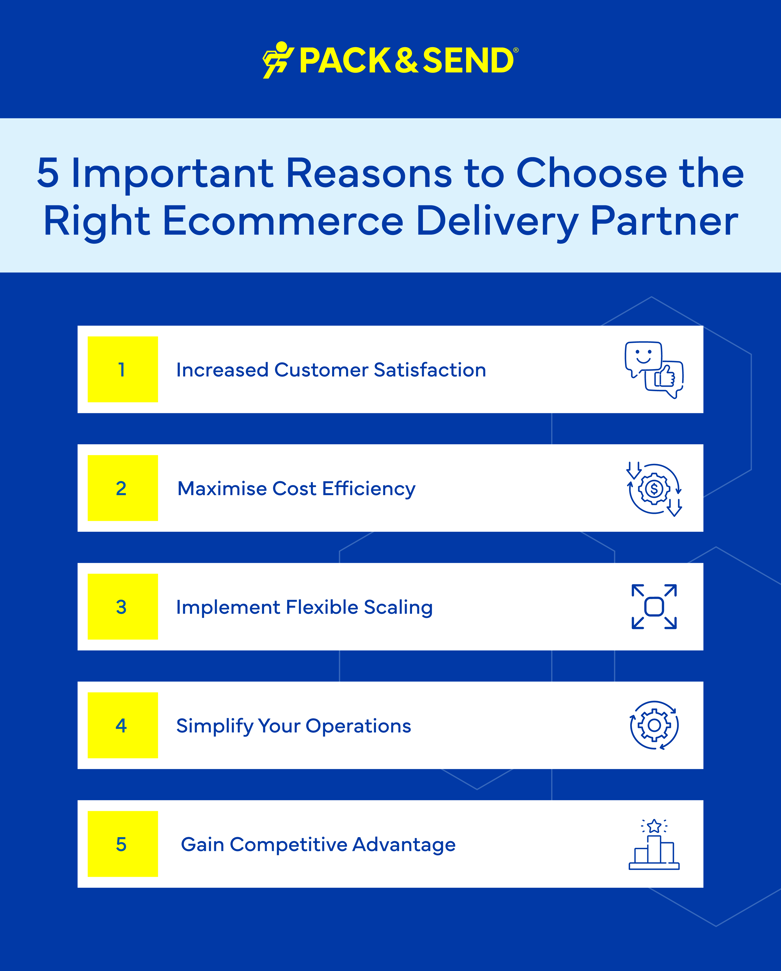
The process of finding the right delivery partner for eCommerce business entails thorough research, strategic alignment, and continuous review. With that in mind, here are some of the most crucial reasons for finding the right delivery partner:
1. Increased Customer Satisfaction
Depending on the delivery partner you choose, the final leg of the journey can either go smoothly or face numerous issues. By choosing a reliable delivery partner, you can take complete control of your logistics process and buyer’s journey.
Regardless of the marketing or UX strategy applied to your website, issues like late arrivals, confusing returns, or damage claims can erode customer trust.
On the flip side, boosting your overall website experience and seamless navigation can boost organic referrals, positive reviews, and long-term loyalty.
To understand this better, think about micro-delivery eCommerce platforms that earn a competitive edge with faster delivery and a reliable logistics strategy.
2. Maximise Cost Efficiency
Last-mile delivery is often the most expensive part of a typical fulfillment process, and contributes to a significant portion of the cost.
By partnering with a strategic delivery partner, you can reduce the total costs associated with every order by offering:
-
Bulk/volume discounts
-
Batch fulfilment
-
Optimized routes
-
Tech-driven process automation
3. Implement Flexible Scaling
To ensure that your operations can streamline and handle seasonal peaks, flash sales, and even new region expansion equally well, you must select an experienced and scalable logistics partner.
If you are working with logistics partners that can’t scale, you will risk bottlenecks, negative feedback, and delays, especially during crucial business windows or sales events.
4. Simplify Your Operations
When you are working with a highly professional or integrated courier service provider, you can work on boosting the efficiency of your operations and simplifying them.
As a result, you can save time and resources that you might otherwise spend on administration, handling exceptions, and reconciliations.
With that in mind, some of the top courier service providers today offer features like:
-
Easy integration of free and budget-friendly APIs
-
Automated creation and implementation of tracking links
-
Highly efficient and hands-off returns management
5. Gain Competitive Advantage
Having a highly reliable and strong delivery partner by your side can assign a significant competitive advantage to your eCommerce store or online retail business.
As a retailer, you can use real-time delivery tracking, flexible delivery slots, and automated eCommerce notifications to elevate your repeat purchase rate, compared to other eCommerce businesses.
When leveraged right, your eCommerce delivery partners can become an operational linchpin for your business, and even turn into a brand differentiator.
4 Risks of Having Poorly Managed Logistics and eCommerce Deliveries
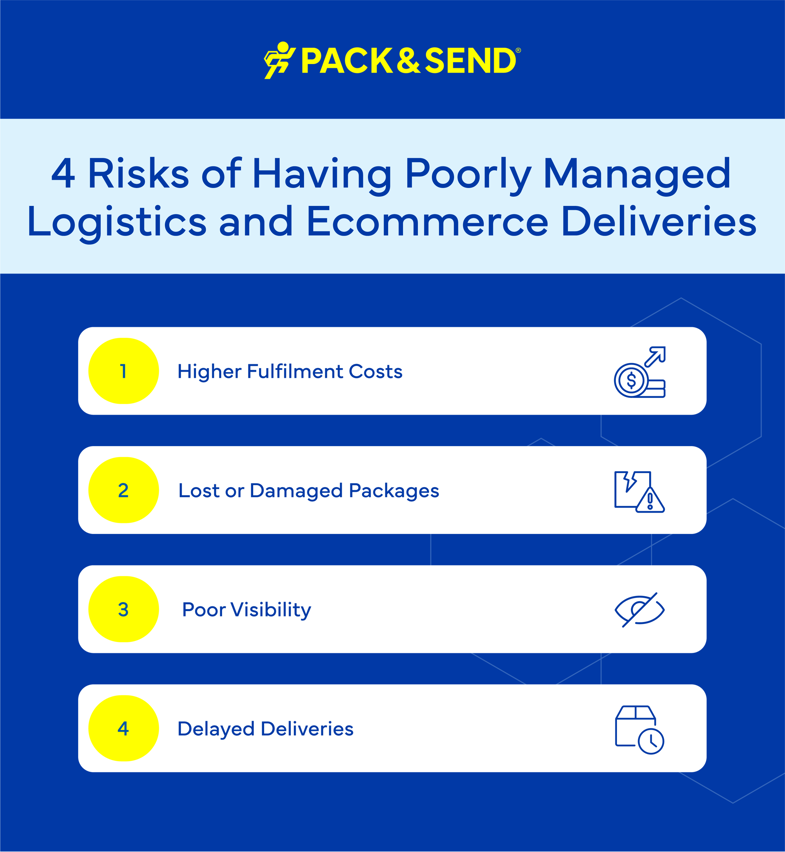
We now have clarity about the reasons that make it important to have a strong delivery partner supporting your eCommerce operations. Aside from these reasons, not having the right delivery partner supporting your logistics and eCommerce processes can elevate operational risks, such as:
1. Higher Fulfilment Costs
Some of the major issues associated with your logistics operations include a lack of automation, poor negotiation, and not leveraging bulk rates.
Any of these issues or a combination of them can lead to fulfilment costs spiraling out of control.
Add to this other factors like fuel surcharges, manual intervention, and missed discounts that can lead to significantly higher order fulfilment costs.
For example, fast fashion brands can end up with higher fulfilment costs if they don’t leverage batch processing and dynamic pricing effectively in their logistics operations.
2. Lost or Damaged Packages
Without a reliable courier service, misplaced or damaged packages can happen — and they can quickly become a major cost for your business.
To reduce risk, it’s important to use secure packaging, choose the right service level, and use real-time tracking where available.
For added peace of mind, you can also choose Shipment Warranty (subject to terms and conditions), which may provide coverage for eligible loss or damage during transit. Without this protection, compensation is often limited — and a lost shipment can lead to expensive refunds, replacements, or chargebacks.
3. Poor Visibility
Over 39% of customers cite a lack of visibility into order fulfilment as a key pain point in the process.
When you are dealing with a large order volume or a complex supply chain, ensuring visibility and transparency can be challenging. However, you can leverage real-time status updates and integrated tracking capabilities to enable better visibility into your packages, and even avoid miscommunication and delays, thus minimising customer frustration.
4. Delayed Deliveries
When you are dealing with improper route planning or the inability to deal with peak demand, you can end up with delayed deliveries.
Now, combine that with fragmented or inadequate communication, and you could face a lot of issues in the order fulfillment process. Even a single delay in delivery can reduce the likelihood of repeat purchases significantly.
For example, if you are unable to fulfil all your deliveries on time, you may end up receiving a lot of negative feedback and reviews.
3 Things You Should Decide Before Choosing an Ecommerce Delivery Partner
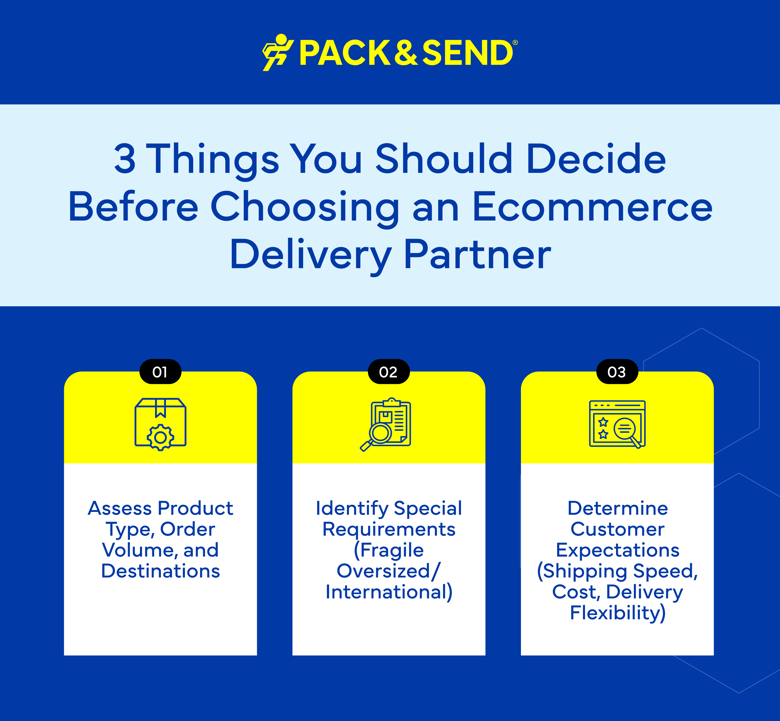
We have now looked into the reasons associated with choosing the right delivery partner and the risks associated with poorly managed deliveries.
With that in mind, let us consider the three major decisions that you must prioritise and navigate, before choosing the right delivery partner for your operations:
1. Assess Product Type, Order Volume, and Destinations
Conduct a thorough audit of your inventory and shipping processes before anything else. Figure out the nature of your products, as they will directly impact the logistics needs and processes. Like certain items may require specialised packaging or refrigerated shipping, other items that are oversized may need special packaging or transport vehicles.
Then, ask yourself whether you ship hundreds of packages every day or just a handful of orders every week.
When dealing with high-volume shipping, your shipping partners must provide integrations with relevant software, automation of batch fulfilment, and discounted bulk shipping rates. Lower-volume shipping requires reliability and flexible pick-up schedules.
Your destination is also crucial because the shipping parameters are different for cross-border, national, and local shipments. Choose a logistics partner who maps your shipping process and network based on your specific needs.
2. Identify Special Requirements (Fragile/Oversized/International)
Aside from the features of your shipment, recognising the specific needs and requirements associated with the eCommerce product delivery process to understand the important specifics of the product.
If your products are fragile, you may want to prioritise partners who have proven expertise in careful handling and a seamless claim resolution process.
Similarly, when you are dealing with oversized products, you may have to overcome a lot of logistics hurdles with a varied fleet and a dedicated process to deal with oddly shaped items.
Moreover, dealing with international packages entails finding shipping partners with multilingual customer support and calculating relevant duties and taxes.
3. Determine Customer Expectations (Shipping Speed, Cost, Delivery Flexibility)
You must prioritise customer expectations when defining your delivery strategy, as some expect ultrafast shipping and others expect standard delivery in exchange for reduced shipping costs. To get this right, start by analysing your customer base, historical trends, and available shipping options before determining the right strategy.
In the process, seek answers to the following questions:
-
Are my customers price-sensitive?
-
Do my customers value speed even if it comes at a premium cost?
-
Do my customers want same-day or overnight shipping?
-
Are my customers looking for specialised or “green” delivery?
These answers will help establish alignment between your services and brand mission.
Moreover, you must prioritise flexibility as much as your cost and speed by providing weekend drop-offs, pickup locations, and modification of shipping addresses.
Utilise a combination of all these factors to come up with the right blueprint for the partnership, so that you can seamlessly deliver and streamline your deliveries.
Managing these decisions right at the outset can help you understand the type of shipping partners right for your operations and business.
9 Factors to Consider When Choosing an Ecommerce Delivery Partner
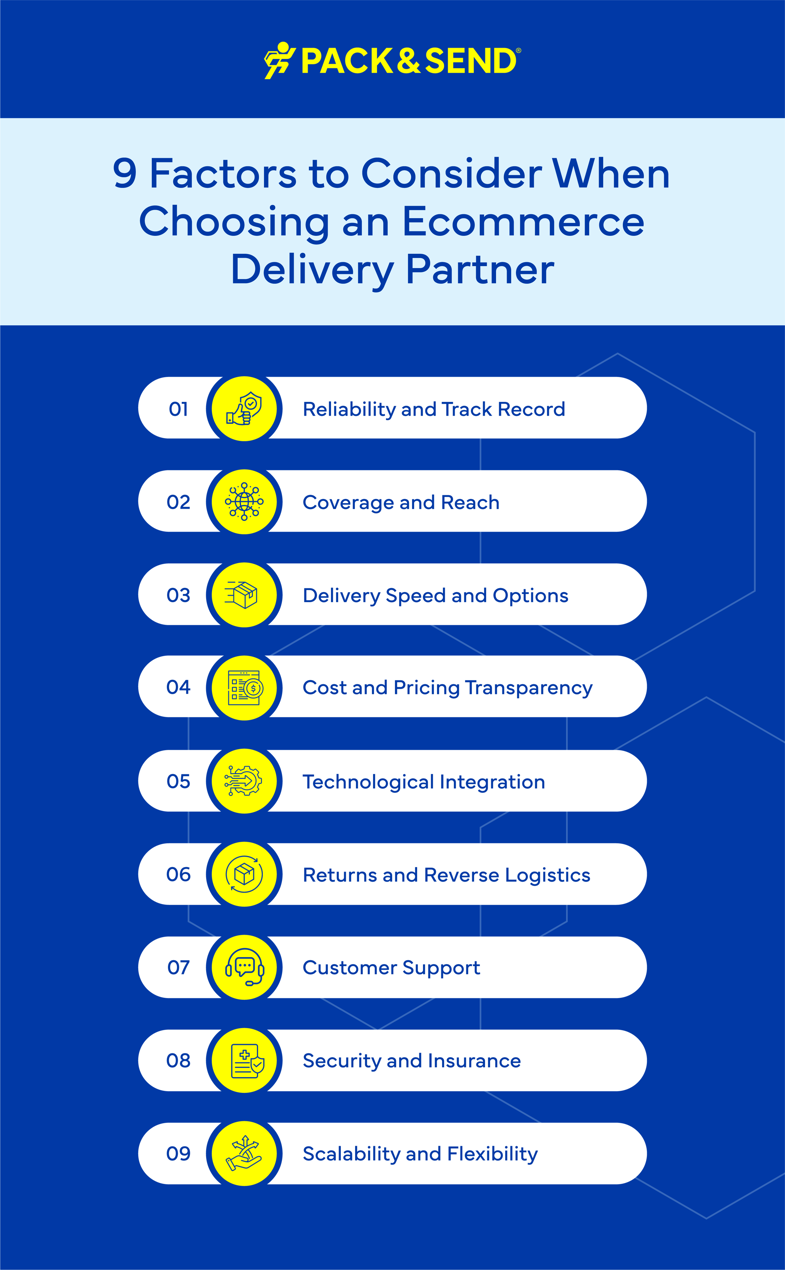
Once you have the aforementioned pre-requisites and decisions figured out, you must apply a structured 9-factor criteria to evaluate the right eCommerce delivery partner for you. The major factors to keep in mind are:
1. Reliability and Track Record
You must evaluate their history to ensure on-time and consistent deliveries, as well as prompt resolution of issues in the process. Checking the track record is important because shipping partners for eCommerce that have earned trust through years of performance and customer satisfaction are definitely more reliable.
2. Coverage and Reach
Consider the specific geographical locations you serve and check if the partner you are selecting also caters to those locations, whether they are local, national, or international.
By choosing partners with a wide reach and coverage, you can reach all your target customers without any service gaps.
3. Delivery Speed and Options
Most shipping companies offer a wide range of delivery speeds, such as standard, express, and same-day shipping. Offering such versatile options can help you cater to customers with different kinds of expectations and needs.
4. Cost and Pricing Transparency
You must assess the different kinds of costs and expenses, including shipping rates, additional fees, and discounts that factor into the overall small business eCommerce shipping cost calculation.
Aside from this, you should also implement transparent pricing that can help you draw up accurate budgets and avoid surprises.
5. Technological Integration
When running an online store, you must ensure that the systems and software tools associated with the shipping partner seamlessly integrate with your website, warehouse, and inventory systems.
An integrated shipping system must ensure smooth operations and real-time updates at all times.
6. Returns and Reverse Logistics
Consider the process followed by a specific delivery partner for handling the exchanges and returns. Facilitating efficient, customer-friendly, and effective reverse logistics can reduce the friction in the process and boost your brand loyalty, and it must be a key consideration when selecting a shipping partner.
7. Customer Support
Dealing with regular shipments requires you to pick a reliable shipping partner offering seamless and high-quality customer support across channels. You must examine the responsiveness and quality of the support channels offered by the shipping partner. By prioritising efficient customer service, you can quickly resolve delivery issues and reassure buyers.
8. Security and Insurance
You must ensure that the shipping partner you choose implements adequate measures to safeguard your shipment from loss, damage, or theft. If you deal with a lot of valuable goods in your shipments, you must offer insurance options to cover any damages.
9. Scalability and Flexibility
Any shipping partner you work with must know how to handle your growth, seasonal spikes, and evolving business needs. You must find and implement scalable and flexible solution providers who can support your business as it evolves or scales.
5 Actionable Tips for Choosing the Right eCommerce Delivery Partner
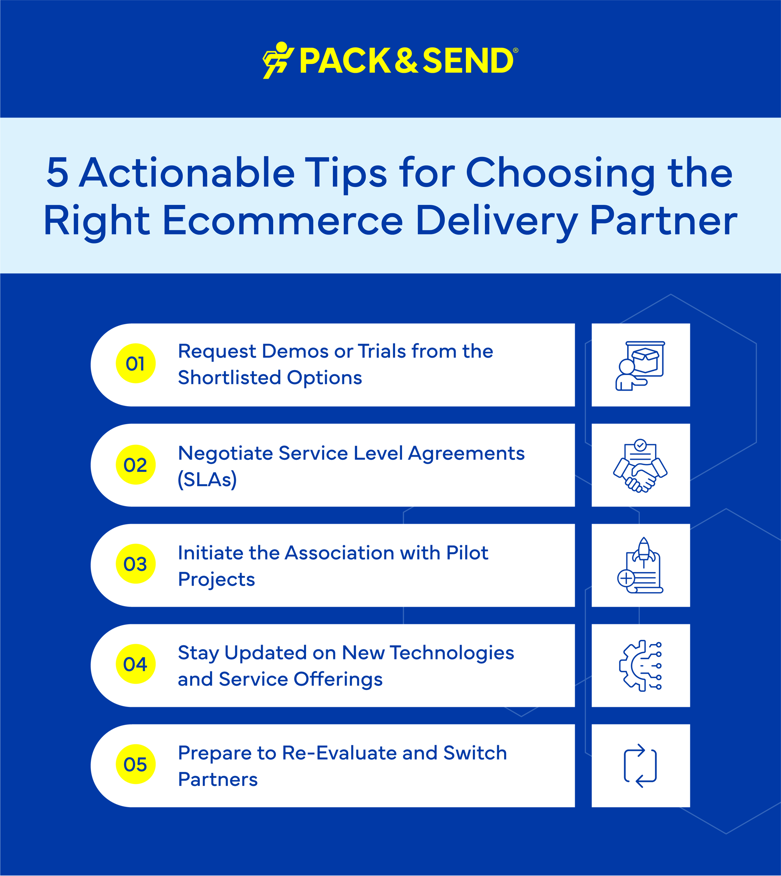
By now, we have covered the basics associated with eCommerce delivery operations and partners. Let us now explore the actionable part of choosing and managing the eCommerce delivery partner process.
1. Request Demos or Trials from the Shortlisted Options
If you are unsure about the service quality and qualifications of the chosen shipping partner, it is a good idea to first witness their services in action through demos and trials. If your shipping partner has a digital platform, you must ask for live demos, customer support channels, and tracking systems.
If not, you can also request short pilot programs wherein companies handle a batch of limited real orders. During this period, you can also assess the accuracy of the data they provide on the dashboard, the frequency of notifications, and address any hiccups. Such demos and trials can help you compare partners and get a better understanding of their strengths and limitations before signing a contract.
2. Negotiate Service Level Agreements (SLAs)
Implementing a formal service level agreement (SLA) protects your customers and businesses by defining and implementing clear expectations for delivery performance. You must insist on narrowing down the primary metrics, such as:
-
On-time delivery percentage
-
Damage rates
-
Coverage commitments
-
Compensation protocols for missed or delayed parcels
By setting clear expectations regarding these metrics and service process, and negotiating the right terms into your agreements, you can ensure transparency and accountability.
By selecting shipping partners that accommodate custom SLAs, you can enjoy increased flexibility and reliability in your eCommerce shipping strategy.
You should also review these SLAs regularly to drive improvement or make timely interventions in case of service quality dips.
3. Initiate the Association with Pilot Projects
Initiating an association with a shipping partner can often be a difficult decision to make for a business that depends too much on its logistics process.
To streamline the process, consider carrying out a pilot project with the shortlisted partners so that you can generate valuable performance insights.
By processing a trial batch of orders as a pilot, you can assess the shipping partner’s performance in varying conditions, destinations, product types, and urgency levels.
You must analyse the delivery times, customer feedback, and the shipping partner’s response to exceptions.
Pro Tip: When assessing the performance of a shipping partner, you must consider their operational efficiency, customer experience, and flow of communication to ensure a holistic decision.
4. Stay Updated on New Technologies and Service Offerings
Ecommerce logistics is an evolving field, and the modern-day online retail experience is driven by emerging technologies.
With the help of innovations like AI-powered routing, advanced tracking, autonomous vehicles, and flexible payment models, you can elevate the overall shopping experience on your online store.
You must also conduct thorough research on courier industry trends and consult with logistics partners about any new features or upcoming upgrades.
By adopting technologies early and facilitating digitally-powered processes and systems, you can give your business a definite competitive edge. What’s more, proactive communication can also help you increase efficiency and ensure customer satisfaction.
5. Prepare to Re-Evaluate and Switch Partners
You can level up the success of your eCommerce store by becoming more dynamic and regularly reviewing your logistics arrangement to keep up with evolving market scenarios and demands.
You must also consider scheduling periodic performance reviews quarterly or annually, and benchmark the results against the SLAs and industry standards. Aside from this, you must also consider alternatives or backup vendors who can step in if your current delivery partner does not meet expectations.
Ensure that your SLA offers enough flexibility to change the eCommerce partner in case a newcomer offers better coverage, price, technology, and service to your business.
Adopting this approach can help your business adapt quickly and ensure customer satisfaction at all times. You can also capture emerging opportunities for your business without being disrupted by outdated logistics solutions.
Concluding Remarks
Your delivery and shipping processes are the lifeblood of your eCommerce operations. From ensuring that your shipment is being shipped to the right destination, packed well, to handling them properly, your delivery partner can take care of most parts of the process for you. It is important to keep in mind that your delivery partner is not just a vendor, but also your operational backbone and brand ambassador as long as you find the right one.
Even after you do, conduct continuous research, negotiate the rates, and optimise the process regularly for consistent outcomes. Contact us if you are looking for an experienced delivery partner who can guide you through the process at competitive prices.
Frequently Asked Questions (FAQs)
1. What is a shipping partner?
A shipping partner is a third-party shipping service provider who can assist businesses, especially eCommerce stores, with their order fulfillment process. Such shipping partners generally take over the process from the point after the order is processed, right up to the point when it is delivered.
2. How to choose a delivery partner?
To ensure that you choose the right delivery partner for your eCommerce business, you must consider a wide range of factors in the process. From their reliability and tracking features to their reverse logistics process, you must opt for a delivery partner who offers a wide range of delivery speeds, costs, technological capabilities, and customer support features.
3. What is the role of an eCommerce delivery partner?
For any eCommerce store, the role of a delivery partner is to take over the last leg of the shipping process. This means that the eCommerce delivery partner must ensure timely delivery of the shipment at the destination city, assign the delivery personnel, and ensure accurate delivery of the shipment to the customer after validation.
4. What are the benefits of choosing an eCommerce delivery partner?
With the help of a reliable eCommerce delivery partner, you can ensure quality and efficiency in your shipping and logistics operations. A professional eCommerce delivery partner will help you ensure that your shipment is delivered on time, accurately, and with the customer support necessary for seamless delivery operations.